
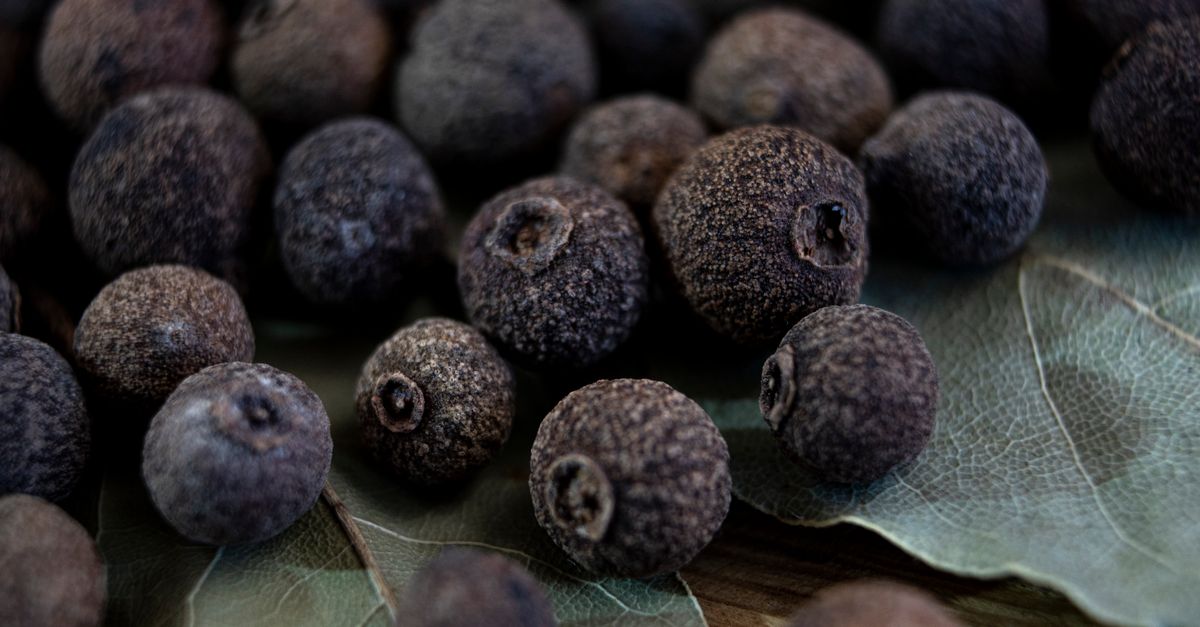
Allspice (Pimenta dioica, also called Jamaica pepper) is a tree spice that grows in hot, humid parts of India, but it is not a commercial plantation crop here. Kerala has scattered trees, with a few in Karnataka and Tamil Nadu. It suits a farmer who has room for a few trees among other crops and is ready to wait 3 to 6 years for the first berries.
No Indian market price, buyer list or cost-of-cultivation study was found for allspice, so no income figure is given on this page. The spice board and buyers in your area must be asked for a current rate before any planting beyond a handful of trees.
Where it grows in India
- ICAR-IISR (Indian Institute of Spices Research) lists allspice among its mandate crops and states that it is cultivated in Kerala. Press reports from Wayanad describe it as rarely planted, usually two or three trees beside regular crops.
- Climate and soil: TNAU gives deep, humus-rich loams and lateritic soils, annual rainfall of 100 to 200 cm and an ideal temperature of about 27 degrees C. IISR describes it as needing a hot, humid climate and well-drained soil.
- It does not suit dry plains, frost-prone areas or waterlogged land.
Planting material
- The tree is dioecious, with separate male and female trees, and only females bear berries. TNAU advises keeping a male to female ratio of 1:10 in a plantation. Seedlings cannot be sexed until they flower, which is the main planting risk.
- Seed: sown in prepared nursery beds, it germinates about 15 days after sowing. Seed-raised trees flower in about 6 years.
- Air layering: done in January, it produces clonal plants that flower in about 3 years, and lets you choose a tree known to be female and productive.
- No released Indian variety was verified. Buy planting material from a state horticulture department, ICAR institute or KVK that can name the parent tree.
Spacing and planting
- TNAU recommends 6 m x 6 m, about 112 trees per acre (277 per hectare), of which roughly one in eleven should be male.
- Plant at the start of the monsoon in pits filled with topsoil and farmyard manure, and keep young trees watered through their first dry seasons.
Nutrition
- First year: TNAU gives 10 kg farmyard manure with 20 g N, 180 g P2O5 and 50 g K2O per tree.
- Trees over 15 years: 50 kg farmyard manure with 300 g N, 250 g P2O5 and 750 g K2O per tree, in two splits, in shallow trenches 1 to 1.5 m from the trunk.
- For the years between, ask your KVK to scale the dose. A soil test avoids waste.
- Paclobutrazol at 1.25 g per tree is listed by TNAU to improve flowering and fruit set. Use it only on KVK advice and follow the label.
- Press reports say the tree rarely suffers serious pests or diseases. No Indian pest schedule was found.
Harvest and yield
- Berries are picked when fully grown but still green (unripe), then dried. Dried berries keep about a quarter of their fresh weight.
- TNAU gives 20 to 25 kg of dry berries per tree per year for mature trees. A farmer quoted in a Kerala press report said more than 15 kg of berries per tree with proper care, which is a fresh-weight style figure; at 25% recovery that is under 4 kg dry. The two figures differ by about five times, so plan on the lower one until your own trees prove otherwise.
- Per acre, the lower figure over about 100 female trees gives roughly 375 kg of dry berries; the TNAU figure would give 2,000 to 2,500 kg. Neither has been confirmed by an Indian field study, and young trees yield far less.
- Dried leaves are also saleable, according to the same press report, and leaves and berries can be distilled for oil.
💡 Tip: Plant 5 to 10 trees first, from air-layered stock of a known female tree, and find a buyer for the dried berries before adding more.
Cost and returns
- No verified Indian price for dried allspice and no cost study were found, so a profit figure cannot be honestly given. To estimate returns, multiply your expected dry yield per tree by the rate a buyer will confirm in writing, then subtract planting, labour and drying costs.
- Because the first crop takes 3 to 6 years and early yields are low, treat allspice as a long-term supplementary tree, not an income crop. It adds little extra cost when it grows alongside other crops, as in Wayanad.
Market and uses
- The dried berry is used whole or ground in pickling, sausages and meat products, and in jerk seasoning. The oil and oleoresin go into flavouring, perfumery and cosmetics. Jamaica is the world's largest producer and exporter.
- Ask spice traders in Kochi or the Spices Board for buyers and current rates, and check mandi prices and export buyers, though allspice is rarely listed.
- For other tree spices with established Indian markets, compare black pepper before committing land.