
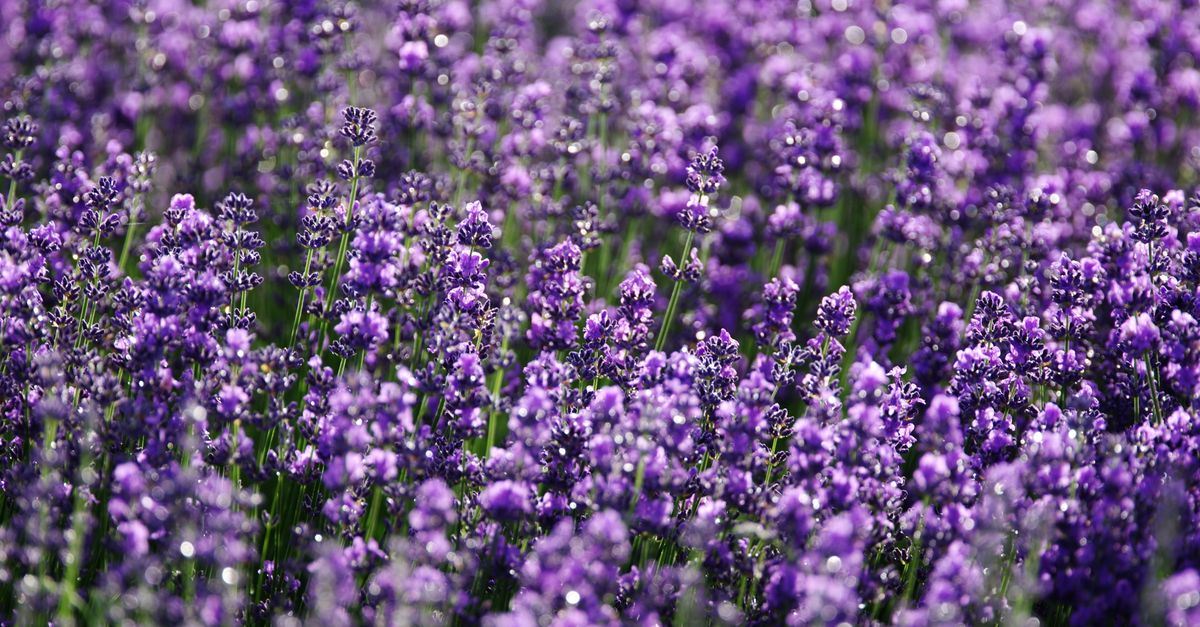
Lavender (Lavandula angustifolia) works in India only in the cool hills: it has been grown above about 800 m in Himachal Pradesh and, since the CSIR Aroma Mission began in 2016, across the Jammu and Kashmir hills around Bhaderwah (Doda), Ramban, Rajouri and Pulwama. It needs a hill farm with enough land, free or cheap planting material, and access to a steam distillation unit within a day of harvest, because the product is the essential oil.
It is a perennial that starts yielding early, but income depends on oil yield and a buyer for the oil. Reported prices are dated and vary, so test the market before planting beyond a small plot.
Where it grows in India
- Jammu and Kashmir: CSIR-IIIM Jammu introduced commercial lavender in the Jammu division's temperate zone under the Aroma Mission, centred on Bhaderwah in Doda district, where farmers moved from maize. CSIR-IIIM reports the crop later spread to Gool, Batote, Banihal, Ramban, Udhampur, Kathua and Rajouri, and that more than 5,000 farmers in J and K have taken up aromatic and medicinal crops under the mission.
- Himachal Pradesh and others: CSIR-IHBT, Palampur ran demonstration fields at Palampur (Kangra) and at the CSK HPKV station at Salooni (Chamba). The crop has also been taken up in Uttarakhand, Arunachal Pradesh, Nagaland and Ladakh.
- Altitude and soil: an IHBT economics paper says Lavandula angustifolia grows only above about 800 m in poor, dry soils. CSIR-IIIM describes its variety as suited to rainfed temperate areas of the Kashmir valley and Jammu division. It is a poor choice for the plains, humid areas or waterlogged land.
Variety and planting material
| Variety | Source | Notes | Suited to |
|---|---|---|---|
| RRL-12 | CSIR-IIIM, Jammu | Elite variety with a CSIR agrotechnology package | Rainfed temperate Kashmir valley and Jammu division |
- Under the Aroma Mission, CSIR-IIIM gave free planting material and a technology package on cultivation, processing and marketing; more than 45 lakh free plants had been distributed by the time of its Purple Revolution report. Experienced growers were reported to pay about ₹5 to ₹6 per sapling.
- Plants are raised from rooted cuttings; the IHBT paper puts nursery cost at Re 0.70 per rooted cutting (2007). Farmers have been trained in vegetative propagation to keep the variety true.
- For spacing, planting season and manure schedule, use the package given by CSIR-IIIM, CSIR-IHBT or your KVK for your altitude; no single verified Indian spacing is quoted here.
- Reports from Doda describe low water and fertiliser needs, with farmyard manure alone being enough for many growers.
Harvest, distillation and oil yield
- Product: flowering spikes are cut and distilled for essential oil; some farmers also sell dry flowers. Ask CSIR-IIIM or your KVK for the right cutting stage and timing at your altitude.
- Spike yield: the IHBT economics study in Himachal worked on 35 quintals of spikes per hectare per year (about 14 quintals per acre).
- Oil yield: Down To Earth's report from Doda quotes 32 to 40 litres of oil per hectare (about 13 to 16 litres per acre) from lavender grown there. CSIR-IIIM reports 80 to 90 kg of flowers from one kanal.
- Distillation: oil is steam-distilled soon after harvest. Doda had four distillation units at the time of that report, with more planned, so check where your nearest unit is before planting.
💡 Tip: Start with a small plot, ask CSIR-IIIM, CSIR-IHBT or your KVK whether planting material and distillation are available near you, and get a buyer's written rate for oil before you scale up.
Cost and returns
- Dated cost baseline: the 2007 IHBT paper (Journal of Non-Timber Forest Products) put cost of cultivation at ₹54,049 per hectare per year (about ₹21,900 per acre), oil production cost at ₹1,894 per kg, net return at ₹32,247 per hectare per year and a benefit-cost ratio of 1.58. These are old figures; labour and distillation costs have risen since.
- Price: Down To Earth quoted a minimum of ₹10,000 per litre of oil. CSIR-IIIM reported dry flowers fetching ₹800 to ₹1,000 per kg. Both are reports from a few years ago, not current market rates.
- Arithmetic (illustration): 32 to 40 litres per hectare x ₹10,000 per litre = ₹3.2 to ₹4 lakh gross per hectare, about ₹1.3 to ₹1.6 lakh per acre, before cultivation, labour and distillation costs. If the price falls to half, the gross halves.
- Check subsidy finder and your district horticulture office for aromatic-plant support; no current subsidy rate for lavender was verified.
Market and risks
- Buyers named in the Doda report were Mumbai-based fragrance and aroma companies, and local oil traders sell to dealers across India. The buyer's written rate matters more than the yield.
- Risks are a thin buyer base, oil price swings, weather at flowering, and distance to a distillery. Group planting and a shared still through an FPO reduce the distillation risk.
- For water saving on hill plots, see drip irrigation.
Sources
- CSIR-IIIM Jammu, Purple Revolution of Jammu and Kashmir
- CSIR-IHBT, Economics of lavender in Himachal Pradesh (Journal of Non-Timber Forest Products, 2007)
- Down To Earth, Jammu's Purple Revolution: lavender brings scent of profit for Doda farmers
- Kashmir Life, CSIR-IIIM begins 2026 lavender harvest in Pulwama