
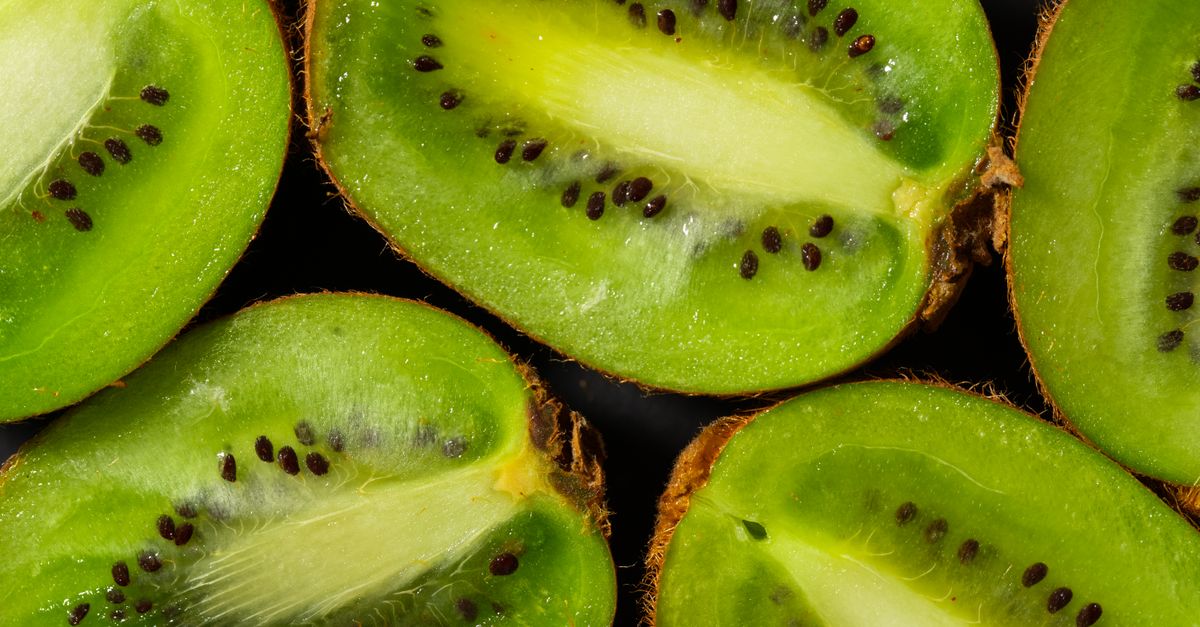
Kiwi works in India only in the cool hills, roughly 600 to 1,500 m above sea level, where winter gives 500 to 800 hours between 0 and 7°C: Arunachal Pradesh, Sikkim, Nagaland, Manipur, Mizoram, Himachal Pradesh and Uttarakhand. It will not fruit in the plains. It needs a trellis, hand pollination, deep well-drained soil and patience, because the first saleable crop comes only in the 4th to 5th year.
Production is small but rising. According to ICAR (Indian Farming, July 2025), Arunachal Pradesh leads with 3,558 ha and 7,111 tonnes a year, followed by Manipur (3,025 t), Sikkim (2,159 t), Nagaland (1,600 t) and Mizoram (1,030 t). The main business problems are cold storage, fruit size and competition from imported fruit, not pests.
Where it grows in India
- Arunachal Pradesh: Ziro Valley (Lower Subansiri) is the best-known area; kiwi is also grown in West Kameng, Lower Dibang Valley, Papum Pare and nearby districts.
- Sikkim: north Sikkim (Lachung, Lachen) and Yuksom in west Sikkim.
- Nagaland and Manipur: Phek, Zunheboto, Kohima, Wokha and Peren in Nagaland; Purul sub-division of Senapati in Manipur.
- Altitude: ICAR gives 600 to 1,500 m for the Himalayan and north-eastern hills. Hayward needs about 800 hours of winter chilling at 0 to 7°C, so it suits higher hills; Bruno and Abbott need less chilling and suit mid-hills.
- Weather limits: dormant vines stand cold down to about -12°C, but frost in spring or early autumn damages buds and flowers. Mild winters give poor flowering. Rain of about 150 cm spread through the season is enough.
- Soil: deep, well-drained sandy loam rich in organic matter, pH 6.0 to 8.0 (about 7.0 is best). Heavy, waterlogged or saline soil is unsuitable and causes root rot.
- Not for: hot plains, and Tripura and Assam, which ICAR says are too warm.
Varieties
Kiwi vines are either male or female. Only female vines bear fruit; male vines are needed as pollinisers. ICAR-NEH Sikkim Centre lists these cultivars for the Himalayan region.
| Cultivar | Type | Traits | Suited to |
|---|---|---|---|
| Hayward | Female | Large, flat-oval fruit, best keeping quality, high sugar and vitamin C; slow to mature and a shy bearer, needs close planting of a late-flowering pollinizer | Higher hills (longer chilling) |
| Allison | Female | Medium fruit, heavy bearer, sweet, low acidity | Mid-hills |
| Monty | Female | Flowers late, matures quickly, prolific; may need fruit thinning for medium size; higher acidity | Hills with late frosts |
| Bruno | Female | Long fruit, high vitamin C, lower chilling need, good bearing | Lower and mid-hills |
| Abbott | Female | Flowers and matures early, sweet, low vitamin C, little chilling needed | Mid-hills |
| Tomuri, Matua, Alpha | Male | Pollinisers. Tomuri flowers late and is the best match for Hayward; Matua and Alpha are the other male cultivars listed | Match flowering time to the female cultivar |
Planting material and spacing
- Plants: grafted or cutting-raised vines. Seedlings are used only as rootstock because seed-raised vines are variable and may turn out male. Poor-quality planting material is one of the constraints ICAR names.
- Pits: 0.6 x 0.6 x 0.6 m, dug in September to October and filled with 20 to 30 kg well-rotted farmyard manure (FYM) plus topsoil.
- Spacing: 4 to 5 m apart according to training system. A Ziro Valley orchard uses 6 m x 4 m (24 sq m a plant), which is about 417 plants per ha or 169 per acre, on a GI wire trellis with iron posts.
- Male to female ratio: 1 male to 8 females is the ICAR recommendation. The Ziro orchard uses 1:10 and the study authors note that 1:8 pollinates better.
- Rows: run north to south. Choose a site free from spring and early autumn frost.
- Pollination: hand pollination is labour-heavy but gives better fruit and yield, according to ICAR.
Training, pruning and feeding
- Year 1: let one shoot grow to the wire; cut the vine back to 30 to 40 cm to form the trunk and allow no side branches.
- Year 2: choose two shoots and tie them along the centre wire as arms. Year 3: select fruiting arms from these and tie them to the outer wires.
- Dormant pruning: cut last year's fruiting canes back to 10 to 12 buds beyond the last fruit, remove broken, tangled and crossing canes, and keep fruiting canes 8 to 12 inches (20 to 30 cm) apart. Prune male vines harder, with more summer pruning. Do not prune after growth starts in spring because the vines bleed.
- Manure (ICAR organic schedule): well-rotted FYM or compost at 10 to 40 t/ha overall, or 25 to 100 kg per plant rising with age, split between February and March; neem cake 2 t/ha in early spring; vermicompost 4 to 10 kg per plant during fruit growth. The Ziro orchard uses only cow dung mixed with soil. For a chemical fertiliser schedule, ask the state horticulture department or KVK after a soil test. Keep mulch away from the vine collar to avoid crown rot.
- Water: vines need a lot of water, especially in the first 2 to 3 years. Water newly planted vines deeply once a week in summer and mature vines every 10 to 15 days in hot weather; drip is more efficient than sprinklers (drip irrigation). Water stress kills more vines than any other cause. The Ziro orchard is rain-fed.
- Weeds: weed two or three times a year, just before mulching and manuring. In Sikkim, Chilaune (Schima wallichii) leaves and Titepati (Artemisia vulgaris) are used as mulch.
Pests and diseases
- ICAR reports no serious pest or disease on kiwi in the north-eastern hills so far. Two pests cause real loss: leaf rollers and greedy scale.
- Leaf roller and greedy scale: ICAR reports two sprays of neem oil 0.15 EC at 3 mL per litre, 15 days apart, work against both; for scale a petroleum-oil spray at 10 mL per litre is the alternative. Follow the label and ask your local KVK.
- Root, collar and crown rot (Phytophthora): caused by waterlogging, mostly in clay soil. Prevention is drainage and planting on well-drained slopes. See pests for general guidance.
- Leaf spots occur but cause little loss.
Harvest, yield and storage
- Years to crop: in the Ziro study, grafted plants fruit in year 2 and cuttings in year 3, but those early fruits are usually eaten at home. First marketable yield comes in year 4 to 5.
- Harvest: October to early November (first week of November in Sikkim). Pick firm fruit at 6.2% total soluble solids or more, snap the stalk, and rub off the hairs with a coarse cloth. Fruit ripens at room temperature 10 to 15 days after storage.
- Yield: a well-managed, hand-pollinated vine can give up to 90 kg (ICAR). The Ziro orchard, a 14-year-old one-acre terraced block, gives 2 to 3 tonnes a year. Treat it as one farm's result, and ask the state horticulture department for district yield figures.
- Grades (ICAR): A is 70 g or more, B is 50 to 70 g, C is under 50 g and goes for juice, wine or dried fruit.
- Storage: fruit keeps up to a month at room temperature and 4 to 6 months in cold storage (ICAR). Without cold storage and pre-cooling, the Ziro farm loses 10 to 15%. See cold storage subsidy.
Cost and returns
ICAR says a grower can earn about ₹4 to 5 lakh per hectare a year. The Ziro orchard owner reports ₹2 to 3 lakh a year from one acre. Establishment cost (trellis, plants, pits) is high and is named by ICAR as a constraint; it depends on terrain, so get a current estimate from the state horticulture department before planting.
| Grade (Ziro Valley, 2025) | Price per kg | Main outlet |
|---|---|---|
| A (large) | ₹150 to 170 | Uttar Pradesh, Delhi, Maharashtra, Rajasthan |
| B | ₹100 to 120 | Regional markets |
| C and D (small) | ₹50 to 80 | Local sale, wine, dried fruit |
Illustration only: 2,000 to 3,000 kg from an acre at an average of ₹100 to ₹120 per kg (a mix of grades) is ₹2 to ₹3.6 lakh gross, before the 10 to 15% handling loss and labour (₹500 a day in Ziro). That fits the ₹2 to 3 lakh the orchard owner reports. Expect nothing in years 1 to 3 and little before year 4.
Market and selling
- The Ziro orchard sells through a cooperative that aggregates fruit from local farmers for wholesale, and Uttar Pradesh buys the largest share. NAFED launched certified organic Ziro kiwi in Delhi in 2021.
- Imported kiwi competes on size. FreshPlaza reports 43,000 tonnes imported in 2023-24 against 18,160 tonnes of domestic output, so demand is not the constraint; fruit size, grading and cold chain are.
- Smaller fruit under purely organic management is a stated problem in Ziro; thinning and good nutrition matter for grades A and B.
- Lower grades can go into wine, dried kiwi and juice; check licensing with the state before making wine.
- Join a producer group (FPO) for cold storage and bulk dispatch. Check current rates on mandi bhav.
Subsidy
Arunachal Pradesh runs the Atma Nirbhar Bagwani Yojana; the Ziro orchard owner received ₹3.8 lakh under it for trellis, infrastructure and marketing. Scheme terms change, so confirm eligibility with the district horticulture office. Use the subsidy finder for central schemes.