
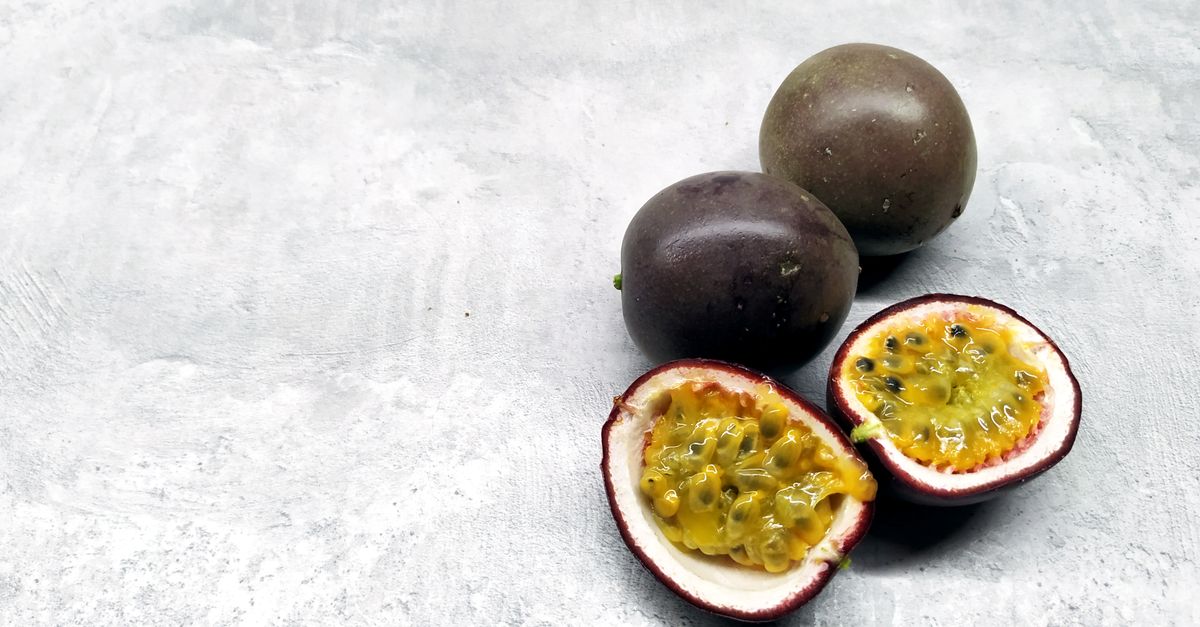
Passion fruit works in India's hill and high-rainfall belts: Nagaland, Mizoram, Manipur, Sikkim, Meghalaya, Kerala (Idukki and Wayanad hills), the Nilgiris, Kodaikanal and Coorg. It is a trellised vine that fruits in about 10 months, but average Indian yield is low at roughly 5 t/ha, so the crop pays only with a good hybrid, a proper trellis, steady nutrition and a buyer for the pulp.
The gap between average and potential yield is the main story. Mizoram's reported productivity is about 2 t/ha, while the IIHR hybrid Kaveri is rated at about 25 t/ha. Closing that gap is a management question, not a land question.
Where it grows in India
- States: cultivation is mainly in the North East (Mizoram, Nagaland, Manipur, Sikkim, Meghalaya), Kerala, the Tamil Nadu hills (Nilgiris, Kodaikanal) and Karnataka (Coorg). National area is reported at roughly 9,000 to 19,000 ha depending on the year and source, with national productivity near 5 t/ha. Brazil, Colombia and Australia are reported at 30 to 35 t/ha.
- Climate: 20 to 30 degrees C is ideal. Growth and flowering are restricted below about 15 degrees C. Purple types suit higher altitude (about 650 to 1,300 m in India, per ICAR-linked guides) and yellow types suit lower, warmer land; yellow is sensitive to cold.
- Rainfall: 100 to 250 cm a year is quoted for Indian hill conditions; the vine hates standing water.
- Soil: well-drained sandy loam rich in organic matter, pH about 6.0 to 7.5, low in salts.
- Plains: there are reports of farmers trying it in Maharashtra and other plains regions, but hot, dry summers and virus pressure make it a risky crop there. Check with your KVK or horticulture department before planting any large area.
Varieties
| Type | Source | Traits | Suited to |
|---|---|---|---|
| Kaveri (F1 hybrid, purple x yellow) | ICAR-IIHR, Bengaluru | Fruit 80 to 90 g, 30 to 35% juice, about 12% total sugar, about 3% acidity; tolerant of brown leaf spot, wilt, collar rot, root-knot nematode and thrips; about 25 t/ha average yield claimed | Mid-elevation hills; the variety ICAR recommends for the North East |
| Purple passion fruit | Local and introduced types | Fruit about 35 to 50 g, good flavour; one guide gives about 10 t/ha | Cooler, higher elevations |
| Yellow passion fruit | Local and introduced types | Larger fruit, about 60 to 65 g; cold-sensitive | Lower, warmer elevations |
- Kaveri is a hybrid and does not come true from seed. Buy rooted cuttings or grafted plants from a nursery that can name the source, and avoid seedlings from fruit of unknown origin, which carry virus and wilt risk.
Spacing and planting
- Pits of 45 x 45 x 45 cm are filled with topsoil and farmyard manure before planting.
- Bower system: 3 x 3 m, about 1,100 vines per hectare (about 450 per acre).
- Kniffin (wire) system: 2 x 3 m, about 1,660 vines per hectare (about 675 per acre).
- The vine needs a strong trellis of posts and wires; a loaded vine is heavy, and the trellis is the biggest fixed cost after planting material.
- Flowers need insect pollination, so avoid spraying insecticide while flowers are open and ask your KVK about hand pollination if fruit set is poor.
Nutrition and irrigation
- One farming guide gives about 10 kg farmyard manure per vine in year 1 and 15 kg per vine from year 2, with vermicompost and oil cake added. ICAR describes passion fruit as highly nutrient responsive, and poor nutrient management is named as a main cause of low yields.
- Specific NPK doses by vine age were not available from an Indian institution page. Get them from your state horticulture department or KVK, and base them on a soil test.
- ICAR recommends fertigation and flowering regulation through pruning as the improved practices. See drip irrigation and fertilizers.
Pests and diseases
- Reported problems: fruit fly, mites, brown spot, root rot and wilt; viral diseases such as woodiness are a known cause of vine decline in passion fruit worldwide.
- For root rot, one guide suggests drenching with 1% Bordeaux mixture and pruning affected parts. Good drainage matters more than any spray.
- Choose tolerant Kaveri planting material, rogue out diseased vines, and follow label and KVK advice for any chemical. See pests.
Harvest and yield
- First fruit comes about 10 months after planting; yield stabilises at 15 to 18 months. Vines are productive for only a few years, so plan replanting.
- Reported yields differ widely: about 2 t/ha in Mizoram, about 5 t/ha national average, about 10 t/ha for purple under good management, 18 to 20 t/ha for Kaveri in one guide and about 25 t/ha claimed by IIHR. Budget on the low end until your own vines prove otherwise.
- Per vine, one guide quotes 8 to 9 kg, or 200 to 250 fruits a year, for well-managed vines.
- Pick fruit that has fallen or turned fully coloured; stored at about 10 degrees C, fruit keeps about 2 to 3 weeks.
💡 Tip: Fix a buyer before you plant: a pulp or juice unit, a hotel supplier or a retailer. Fruit that cannot be sold within days of harvest loses most of its value.
Cost and returns
- A Kerala Agricultural University economics note puts the first-year cost at about ₹1.92 lakh per hectare, with about 3 t in year 1 rising to about 10 t in year 3, and a total profit near ₹6 lakh over five years (older figures; costs of trellis and labour have risen).
- Price: Nagaland wholesale was reported near ₹45 to ₹50 per kg on a price site (Agmarknet-based, single market). Metro retail for premium fruit is quoted at ₹150 to ₹300 per kg, but farmers rarely get that.
- Illustration: 5 t/ha at ₹45 per kg is ₹2.25 lakh per hectare (about ₹91,000 per acre) gross. 10 t/ha at ₹45 per kg is ₹4.5 lakh per hectare (about ₹1.8 lakh per acre). Subtract trellis, labour and plant cost to get net.
Market and risks
- Buyers are juice and pulp processors, beverage makers and fresh-fruit traders. Manipur, Nagaland and Mizoram have a handful of processing units, so farmers far from them depend on the fresh market.
- Risks: a short-lived vine, virus and wilt, low yield from untrained management, and sharp seasonal price drops in the Kerala peak months.
- Passion fruit is listed as a MIDH area-expansion crop; the current subsidy rate for your state should be confirmed with the state horticulture mission. Use the subsidy finder and form an FPO for pulp-unit tie-ups.
Sources
- ICAR-IIHR, Kaveri passion fruit
- ICAR, passion fruit productivity and improved technologies in Mizoram
- Indian Horticulture (ICAR), promising high value fruit crops for the North East
- Kerala Agricultural University, economics of passion fruit production
- Agri Farming, passion fruit farming guide (secondary source)
- Krishi Jagran, passion fruit growing guide (secondary source)
- ACROP, passion fruit wholesale price, Nagaland