
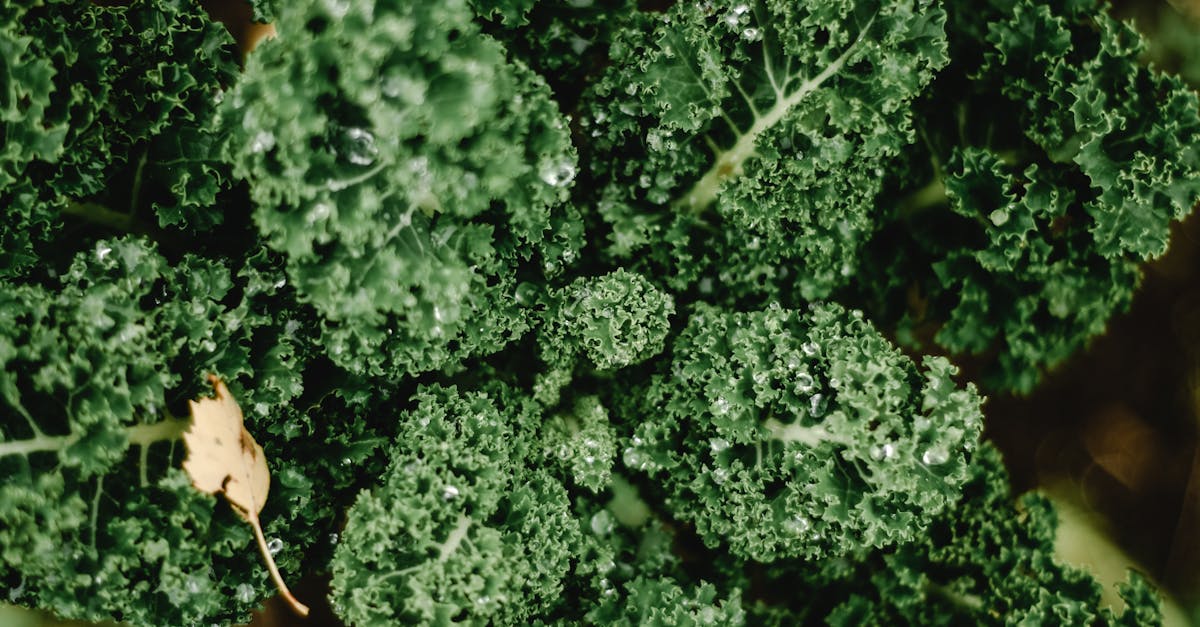
Kale grows well in India as a cool-season leafy vegetable: it is established in Jammu and Kashmir, Himachal Pradesh, Punjab, Uttar Pradesh, Haryana and the Nilgiri hills, and in the plains it is a winter crop sown from August to November. It is easy to grow, but the market is small and urban, so the real work is finding a regular buyer such as a salad, juice or restaurant account before planting more than a small plot.
Kale is a cut-and-come-again crop. Outer leaves are picked repeatedly while the plant keeps producing new ones, so one planting gives weeks of supply. Heat is its limit: ordinary temperate kale wants a cold spell, and summer in the plains suits it poorly.
Where and when it grows
- Climate: kale is one of the hardiest vegetables and can tolerate cold down to about -10 to -15 degrees C. It prefers cool weather and stands frost well.
- Soil: well-drained sandy loam rich in organic matter, pH 5.5 to 6.5. Waterlogged or heavy soil rots roots.
- Sowing window: August to October in the North Indian plains; August to September in Himachal, Kashmir and the Nilgiris, so plants establish before winter. Some farming guides give October to November for home gardens.
- Tropical type: ICAR-IIVR Varanasi has identified VRKALE-1, a tropical kale genotype that flowers under North Indian plain conditions (11.8 to 23.5 degrees C) without needing a long cold spell. See the table below for what is claimed for it.
Types and varieties
| Type or variety | Source | Traits | Suited to |
|---|---|---|---|
| VRKALE-1 | ICAR-IIVR, Varanasi (identified genotype) | Tender leaves 22 to 30 cm long; first picking 23 to 28 days after transplanting, then weekly; 9 to 12 pickings; potential 55 to 60 t/ha | Plains of North India |
| Curly, lacinato and red-purple types | Private seed companies | Different leaf shape and colour; yield depends on the seed lot | Hills and cool plains winters |
- The 55 to 60 t/ha figure is the potential reported by IIVR, not a farm average. Ask IIVR or your KVK about seed availability for VRKALE-1 before building a plan on it.
Sowing, spacing and nutrition
- Seed rate: 400 to 450 g per hectare (about 160 to 180 g per acre). Raise seedlings in a nursery and transplant after 4 to 6 weeks.
- Spacing: 45 x 30 cm, about 30,000 plants per acre (about 74,000 per hectare).
- Manure and fertiliser (per hectare, per acre): farmyard manure 25 t (10 t); nitrogen 150 kg (about 61 kg) in three splits; phosphorus and potassium 75 kg each (about 30 kg), applied as basal dose. Adjust to a soil test; see fertilizers.
- A study in a temperate region (Naik and Gupta, Indian Journal of Agricultural Sciences, 2010) tested plant density with organic and inorganic nutrient combinations on kale in a temperate region; consult it or your KVK for spacing choices in the hills.
- Irrigation: water right after transplanting, then roughly every 3 weeks in cool weather, more often in warm spells. Drip keeps leaves clean.
Pests and diseases
- Aphids, flea beetles, whiteflies and caterpillars (as in cabbage) are the common pests. Field sanitation, yellow sticky traps and neem oil are the usual first steps.
- Leaves are eaten raw in salads and juices, so avoid chemical sprays close to picking. If a chemical is needed, follow the label waiting period and ask your KVK. See pests.
Harvest and yield
- Leaves are ready about two months after transplanting for ordinary types; the first harvest comes November to January for an August to October planting. VRKALE-1 is reported ready 23 to 28 days after transplanting.
- Pick outer leaves of usable size and leave the growing top. Fresh leaves keep about a week in a fridge in plastic bags, so cold-chain handling matters.
- Yield: a farming guide gives 100 to 200 quintals per hectare (40 to 80 quintals per acre) depending on variety and management. Treat this as a range to test locally.
💡 Tip: Start with 0.1 to 0.25 acre and sell to two or three buyers directly. Agree on leaf size, packing (bunch or weight) and delivery day before you plant.
Cost and returns
- No reliable Indian price series for kale was found, and prices differ a great deal between a retail pack in a metro and a bulk sale to a juice bar. Ask buyers for a written rate per kg and use this arithmetic: gross per acre = kg sold per acre x rate per kg. At the farming-guide range, 4,000 to 8,000 kg per acre, each ₹10 per kg of price adds ₹40,000 to ₹80,000 per acre.
- Costs include seedlings or seed, manure, labour for repeated picking (the largest item), packing and transport to a city. Estimate these locally with your KVK or state horticulture department.
Market and risks
- Buyers are health cafes, juice bars, salad and restaurant chains, organic stores and nearby city retail. Demand is concentrated in a few metros, so a large planting can flood a thin market.
- Leaf quality (clean, unyellowed, uniform size) decides acceptance, and weekly picking needs steady labour.
- Kale is not an MSP crop. Compare with other options in crop calendar and check mandi bhav for leafy vegetables near you. Groups can sell together through an FPO.