
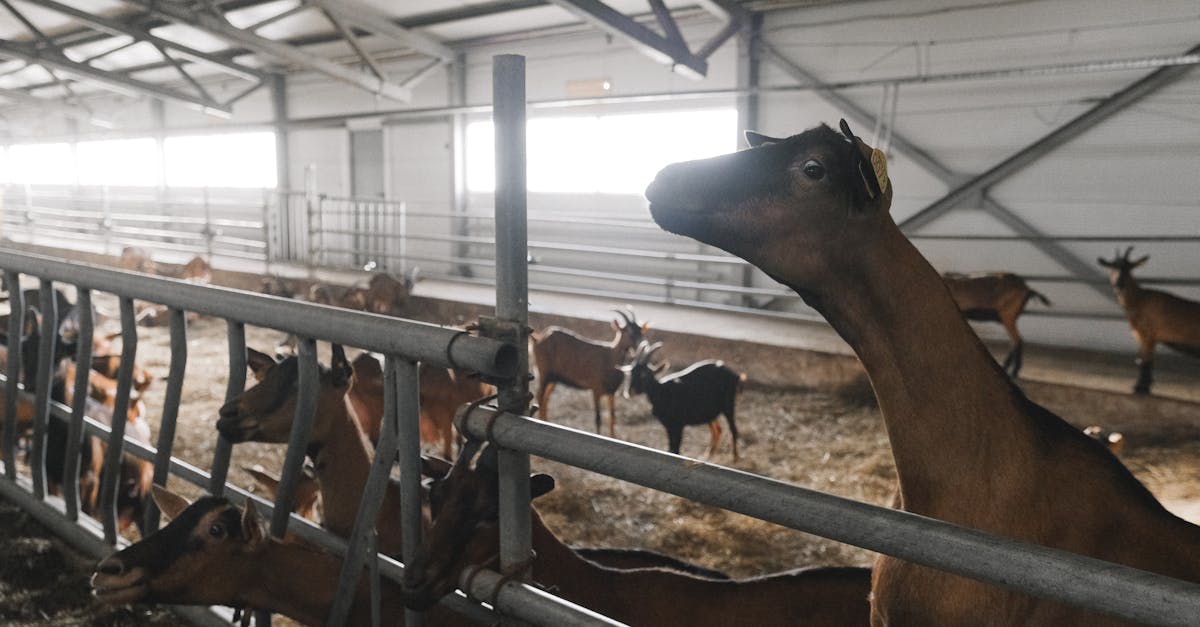
Dairy goat farming works in India as a small-herd enterprise built on Indian dairy breeds (Beetal, Jamunapari, Jakhrana, Surti, Zalawadi), but more than 70% of a goat farm's income still comes from selling kids, not milk, because there is almost no organised goat milk market. Plan the farm around kid and breeding-stock sales first and treat milk as the extra, unless you already have a direct buyer for goat milk.
India is the world's largest goat milk producer, yet the average Indian goat gives only about 0.46 kg of milk a day, and an ICAR-CIRG review says the milk price in most villages is only ₹25 to ₹35 per litre. The income figures below come from that review's costing and change a lot with the milk price you actually get.
Breeds and milk yield
ICAR-CIRG classes Beetal, Jamunapari, Jakhrana, Surti, Zalawadi and Gohilwadi as the Indian milch breeds, with 150 to 500 litres in a 150 to 200 day lactation. The average is about 150 litres; only 8 to 10% of goats reach 250 to 500 litres. Multiple births are common (40 to 60%).
| Breed | Milk per lactation | Lactation length | About per day |
|---|---|---|---|
| Jamunapari | 201.7 kg | 194 days | 1.04 kg |
| Beetal | 173.9 kg | 182 days | 0.96 kg |
| Jakhrana | 121.8 kg | 115 days | 1.06 kg |
| Sirohi (dual purpose) | 113.6 kg | 194 days | 0.59 kg |
| Barbari (dual purpose) | 95.6 kg | 152 days | 0.63 kg |
| Malabari | 90.0 kg | 178 days | 0.51 kg |
- Figures are breed averages from KAU's breed summary of research-station records. Village flocks on grazing give less.
- Dual-purpose breeds (Barbari, Sirohi, Sojat, Gujari, Mehsana, Malabari, Osmanabadi, Sangamneri) give 100 to 145 litres in 90 to 160 days. They are the more realistic choice outside the north-west.
- Demand for goat milk is growing in hot, humid southern and eastern cities, but those regions lack a dairy breed of their own; do not expect the north-western breeds to match their home yields there without trial.
- Beetal, Jakhrana, Jamunapari and Surti are listed by the review as endangered through poor breeding practices, and good bucks are scarce because elite males are often sold or castrated. Buy bucks from ICAR-CIRG (Makhdoom, Mathura) or a state livestock farm and record milk yields.
Housing and breeding
- Space: about 1.5 sq m covered and 3 sq m open space per adult goat (Vikaspedia housing guidance). Keep sheds dry, well ventilated and cleaned often, and keep bucks, does and kids separate.
- Breeding: the CIRG costing assumes first kidding at 18 to 20 months for the milch breeds, a kidding interval of about 11 months, 1.3 to 1.5 kids per kidding and 5% kid mortality.
- Labour: the same costing assumes one worker for 40 does and their followers.
Feeding
- Feeding decides milk yield. Dry matter need is 3 to 4% of body weight for a goat in maintenance and 4 to 7% for a lactating dairy goat, according to the CIRG review.
- More than 90% of goat keepers give no concentrate to lactating goats. High-yielding does need a high-energy ration from the last quarter of pregnancy, or they risk hypocalcaemia, ketosis, udder oedema and mastitis.
- CIRG's costing for one doe and her kids uses about 227 kg of concentrate, 990 kg of dry fodder and 330 kg of green fodder a year (about 2.7 kg dry and 0.9 kg green fodder a day). Grow green fodder on your own land to hold costs down.
Health calendar (ICAR-CIRG)
| Disease | First dose | Booster | Repeat |
|---|---|---|---|
| PPR (goat plague) | 3 months | Not required | Every 3 years |
| Foot and mouth disease | 3 to 4 months | 3 to 4 weeks later | Every 6 to 12 months |
| Enterotoxaemia | 3 to 4 months | 3 to 4 weeks later | Every 6 to 12 months |
| Goat pox | 3 to 4 months | 3 to 4 weeks later | Every 12 months |
| Haemorrhagic septicaemia | 3 to 4 months | Second dose after 1 month | Every 6 to 12 months |
- Deworm from 3 months twice a year, before and after the monsoon, and about 15 days before vaccination. Give anticoccidial drugs to kids aged 1 to 6 months. Screen adults once a year for brucellosis, and check for mastitis early in each lactation. Dose and product per your veterinarian.
- Kids are protected for the first 3 months by feeding colostrum right after birth.
- Helpline of ICAR-CIRG: 0565-2763320 (10 am to 5 pm on weekdays).
Cost and returns
The ICAR-CIRG review costs one doe per year at ₹60 per litre of milk and ₹400 per kg live weight of kids, with yearlings priced at ₹10,000 to ₹15,000 and concentrate at ₹16 per kg. Housing and capital interest are not included.
| Breed | Milk sold per year | Income from kids | Income from milk at ₹60 | Total cost | Net per doe |
|---|---|---|---|---|---|
| Beetal | 90 L | ₹15,680 | ₹5,400 | ₹10,212 | ₹10,868 |
| Jamunapari | 100 L | ₹14,560 | ₹6,000 | ₹10,212 | ₹10,348 |
| Jakhrana | 100 L | ₹15,600 | ₹6,000 | ₹10,212 | ₹11,388 |
| Barbari | 80 L | ₹14,720 | ₹4,800 | ₹9,900 | ₹9,620 |
| Sirohi | 70 L | ₹13,440 | ₹4,200 | ₹8,304 | ₹9,336 |
- Arithmetic at the village price: at ₹30 per litre instead of ₹60, a Beetal doe loses ₹2,700 of milk income and nets about ₹8,170. For 40 Beetal does that is about ₹3.3 lakh a year against ₹4.35 lakh at ₹60.
- Stock cost: 40 yearling does at ₹15,000 is ₹6 lakh before sheds, bucks, fodder land and fencing.
- These are costings with stated assumptions, not guaranteed farm results. Real income depends on kid survival, feed price and the kid price per kg in your market.
Market and risks
- Milk: no goat milk marketing structure exists in most of India, so selling milk depends on your own buyers: households, clinics, small processors or cosmetic and Ayurvedic makers. The CIRG review suggests state milk federations could procure goat milk, and says more research is needed to prove health claims, so do not advertise medical benefits.
- Standards: FSSAI has set standards for goat, sheep and camel milk (sub-regulation 2.1.2 of the Food Safety and Standards food product standards regulations). If you sell packed milk or products, register or license with your state food authority.
- Kids and breeding stock: the main income. Prices vary by season and local demand; confirm the price per kg live weight with local traders before planning.
- Hygiene: clean the udder and teats before milking, wash hands, use clean utensils and test for mastitis.
- Selling as a group can lift prices: see FPO. Ask your bank whether KCC credit can cover your herd, and subsidy finder lists schemes by state.
Subsidy
- NLM entrepreneurship component: the National Livestock Mission gives a 50% capital subsidy up to ₹50 lakh for goat and sheep breeding farms. The unit sizes are 100 females + 5 males (maximum subsidy ₹10 lakh), 200 + 10 (₹20 lakh), 300 + 15 (₹30 lakh), 400 + 20 (₹40 lakh) and 500 + 25 (₹50 lakh). Individuals, FPOs, SHGs, JLGs and Section 8 companies can apply.
- The scheme was approved for 2021-22 to 2025-26. Ask your state animal husbandry department whether it is open or has been extended, and whether your state has its own goat scheme.
- This is aimed at breeding farms of 100 or more does, not a small dairy unit, and it needs a project report and bank loan.
Sources
- Singh et al., Exploring potential of goat based dairy farming in India and way forward, Indian Journal of Animal Sciences 93(3), 2023 (ICAR-CIRG)
- Kerala Agricultural University, goat breeds
- ICAR-CIRG, annual goat health calendar
- DAHD, Lok Sabha unstarred question 418 on National Livestock Mission, 4 February 2025
- Vikaspedia, sheep and goat housing management