
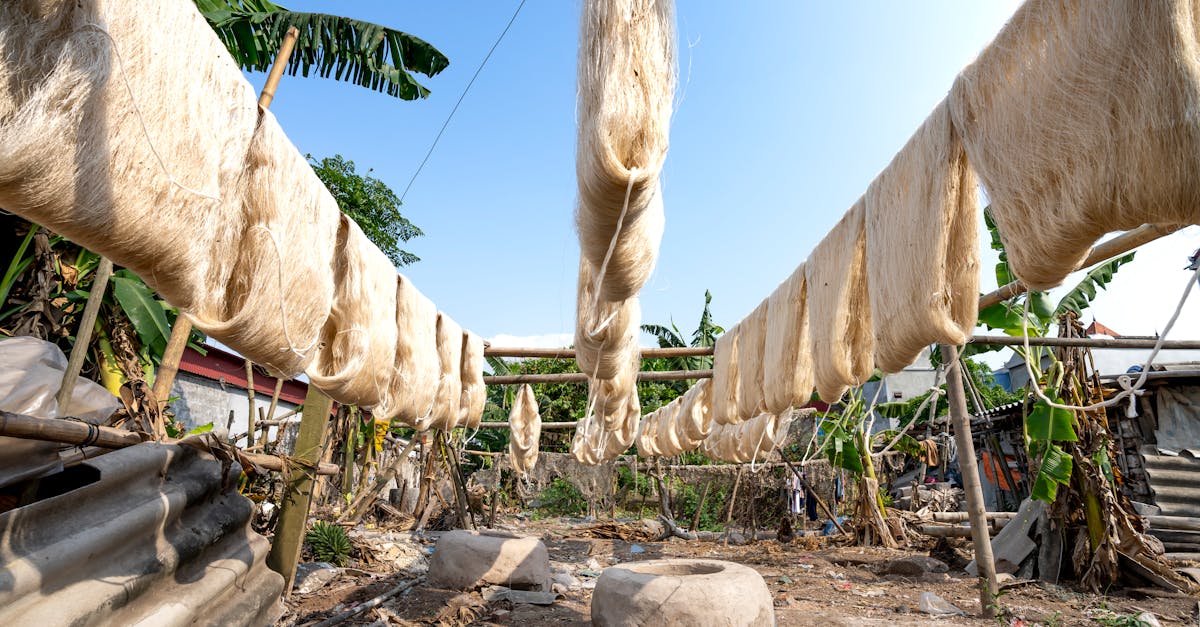
Tasar, eri and muga are the vanya (non-mulberry) silks, and they are realistic only where the host trees or castor already grow and where a seed supply and a reeling buyer exist: tasar in the forest belt of Jharkhand, Chhattisgarh, Odisha and neighbouring states, eri in Assam and the rest of the northeast, and muga only in Assam. Each is a different enterprise, from outdoor tree rearing (tasar, muga) to indoor leaf-feeding on castor (eri), and none is a quick-income crop.
India produced about 10,002 tonnes of vanya silk in 2024-25: eri 7,886 t, tasar 1,884 t and muga 232 t, according to Central Silk Board figures reported in the trade press. Mulberry silk is a separate system; see mulberry sericulture.
The three silks compared
| Silk | Silkworm and host plants | Where | How it is reared |
|---|---|---|---|
| Tropical tasar | Antheraea mylitta on Terminalia arjuna (arjun) and Terminalia tomentosa (asan) | Jharkhand, Chhattisgarh, Odisha, Madhya Pradesh, Bihar, West Bengal, Andhra Pradesh, Telangana, Maharashtra, Uttar Pradesh | Larvae reared outdoors on trees, in forest or plantation, usually by tribal families |
| Eri | Samia (Philosamia) ricini on castor leaves | Assam, Meghalaya, Manipur, Nagaland, Bihar, West Bengal | Reared indoors on cut leaves, with far fewer losses than muga; cocoons are spun as yarn |
| Muga | Antheraea assamensis on som (Persea bombycina) and soalu (Litsea monopetela) | Assam only | Reared outdoors on the trees; several crops a year |
Tasar
- Seed chain: breeder seed from CTR&TI Ranchi is multiplied at the Central Tasar Silkworm Seed Station, Kota, then at Basic Seed Multiplication and Training Centres, and finally by state sericulture directorates, NGOs or private graineurs, who supply commercial dfls (disease-free layings) to rearers. Buy only from these sources.
- Ecoraces: Daba is the most commercially used race and is bivoltine or trivoltine; the right race depends on the local climate zone, so ask the Central Silk Board centre which one suits your block.
- Risks: uzi fly (Blepharipa zebina), yellow fly (Xanthopimpla konowi) and predatory wasps attack larvae outdoors, and heat has caused erratic moth emergence, lower fecundity (120 to 150 eggs per moth) and shifted brushing dates. Green shade net, cool grainage rooms and following the official brushing schedule are the recommended responses.
- Host trees: yield depends on the number and health of arjun and asan trees; tree maintenance with green manure and organic inputs is advised. Rearing in forest areas can involve forest department rules, so check before using forest trees.
Eri
- Why it suits small households: the worms are reared indoors on castor leaves, with far fewer losses than muga, and eri cocoons are open-ended so the moth can leave before the silk is spun as yarn, which is why eri is marketed as non-violent silk.
- Host plant: castor leaves; the quantity and quality of leaf available decides how many worms can be reared. See crop calendar for castor sowing windows in your state.
- Selling: eri has the largest output of the three silks (7,886 t in 2024-25), so there are buyers for cocoons and spun yarn in the northeast; confirm a buyer or a cooperative before scaling up.
Muga
- Silkworm: Antheraea assamensis is endemic to Assam and nearby areas and gives a naturally golden silk. It is multivoltine, with crops named in the Assamese calendar as Jethua (May to June), Bhadia, Kotia (October to November), Aherua and Jarua.
- Cocoon yield: in a comparative rearing study the Jethua crop gave 4,552 to 6,178 cocoons per 100 dfls and the Kotia crop 4,367 to 6,215 per 100 dfls.
- Risks: production has fallen in recent years from disease, natural enemies and climate variation, and limited knowledge of host plants and genetics holds back improvement. Output was only 232 t in 2024-25, down about 8% from the year before.
Costs, income and support
No verified Indian per-household cost and income figure for tasar, eri or muga was available, and the figures in promotional material vary widely. Ask the Central Silk Board's regional office, CTR&TI Ranchi (tasar), the Central Muga Eri Research and Training Institute, Lahdoigarh (muga and eri), or your state Directorate of Sericulture for current rearing costs, dfl prices and cocoon rates in your district. Whether subsidy, a host-plant grant or a training course applies depends on your state scheme, so enquire at the same offices. For credit see Kisan Credit Card and for the other schemes you may qualify for use the subsidy finder.
Market and selling
- Cocoons are sold to reelers and spinners, or reeled and spun by the rearing family and woven into fabric; the value rises sharply with each step, but so does the skill and equipment needed.
- Do not buy dfls, seed cocoons or host plants from unverified sellers or on buy-back promises; ask the Central Silk Board or state directorate for approved suppliers.
- Joining a producer group or cooperative through an FPO helps with seed access, reeling and fair cocoon prices.
Sources
- Rathore et al., Tropical tasar sericulture: current challenges and management practices, Plant Archives 2024 (Central Silk Board)
- Ministry of Statistics (MoSPI), Sericulture chapter: silk types and vanya silk states
- Muga silkworm, Antheraea assamensis: overview of distribution, biology and breeding (FAO AGRIS)
- Comparative study on the rearing performance of muga silkworm (Jethua and Kotia crop yields)
- Alchempro, India's raw silk output in FY25, citing Central Silk Board