
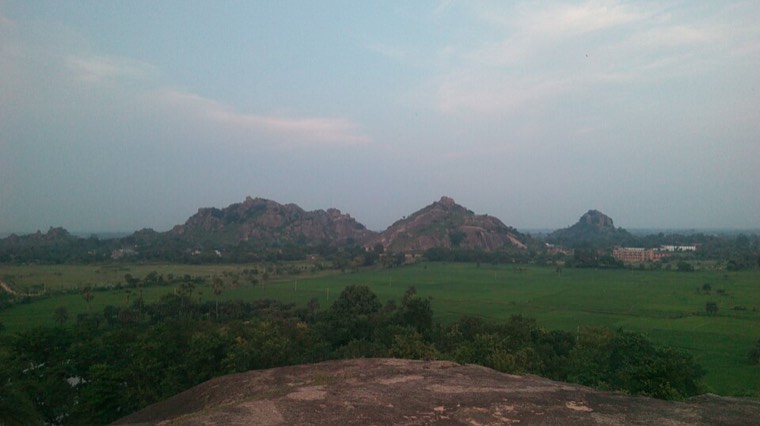
Agriculture in Godda District: Eastern Plateau and Hills
Jharkhand falls mainly in the Eastern Plateau and Hills agro-climatic zone (hot subhumid, 1000-1600mm of rain a year across the zone), where undulating tribal plateau with mostly rain-fed farming is typical. Soils in this zone are mostly red, yellow and lateritic soil. Crops commonly grown across the zone include Rice (Paddy), Ragi (Finger Millet), Maize (Corn), pulses, oilseeds, Niger Seed, Sesame (Til).
These are zone-level facts (ICAR / Planning Commission agro-climatic classification), not a crop census of Godda itself. Godda's own month-by-month rainfall and temperatures are in the climate section.
Crop Calendar for the Eastern Plateau and Hills
| Crop | Season & Window | All-India rate (3 October 2026) |
|---|---|---|
| 🍚 Rice (Paddy) | Kharif (Sow: Jun-Jul, Harvest: Oct-Nov) | ₹3,680/qtl |
| 🌾 Ragi (Finger Millet) | Kharif (Sow: Jun-Jul, Harvest: Oct-Nov) | ₹2,776/qtl |
| 🌽 Maize (Corn) | Kharif (Sow: Jun-Jul, Harvest: Sep-Oct) | ₹2,299/qtl |
| pulses | Local seasonal crop | - |
| oilseeds | Local seasonal crop | - |
| 🌾 Niger Seed | Kharif (Sow: Jun-Jul, Harvest: Oct-Nov) | ₹7,610/qtl |
| ⚪ Sesame (Til) | Kharif (Sow: Jun-Jul, Harvest: Sep-Oct) | ₹11,980/qtl |
Soil, Water & Irrigation
Drip and sprinkler subsidies (45-90%) and a solar pump cut water and power costs. Because soils vary field to field inside a zone, a free soil health card is the only reliable guide to what your own plot needs.
What Godda Actually Grows: Official Crop Statistics
In 2024-25, Godda's largest crops by area were Rice (Paddy), Mustard (Rapeseed), Gram (Chana). Rice (Paddy) alone covered 44,032 ha (35% of the area under the crops listed below), with a yield of 1,998 kg/ha, 5% above the Jharkhand average. The biggest shifts since 2019-20: Urad (Black Gram) area +255%, Rice (Paddy) area +90%.
| Crop | Area (ha) | Production (tonnes) | Yield (kg/ha) | Jharkhand avg yield | Area change since 2019-20 |
|---|---|---|---|---|---|
| Rice (Paddy) | 44,032 | 87,976 | 1,998 | 1,894 | +90% |
| Mustard (Rapeseed) | 24,691 | 22,218 | 900 | 883 | +79% |
| Gram (Chana) | 12,910 | 19,369 | 1,500 | 1,173 | +10% |
| Wheat | 12,872 | 32,173 | 2,499 | 2,201 | +2% |
| Maize (Corn) | 12,080 | 31,230 | 2,585 | 2,418 | +55% |
| Arhar (Tur/Pigeon Pea) | 6,422 | 6,101 | 950 | 1,177 | +18% |
| Urad (Black Gram) | 4,515 | 2,928 | 649 | 879 | +255% |
| Masur (Lentil) | 4,035 | 4,842 | 1,200 | 859 | -2% |
| Linseed (Alsi) | 1,828 | 1,280 | 700 | 607 | -25% |
| Moong (Green Gram) | 869 | 608 | 700 | 834 | +92% |
Source: Directorate of Economics & Statistics, Ministry of Agriculture & Farmers Welfare, Govt of India (final estimates), via UPAg. Field crops only - vegetables, fruit and spices are counted separately. Jharkhand average = sum of the state's district estimates.
Climate & Sowing Windows in Godda
Godda receives about 1186 mm of rain in an average year, 75% of it in June-September. The wettest month is July (281 mm). Days are hottest in April (average high 39°C) and nights coolest in January (average low 9°C).
- Rain typically first crosses 100 mm a month in May, the usual cue for kharif sowing here.
- Winter nights average about 9°C, cool enough for rabi crops such as wheat, mustard, gram and potato.
- March days already average 35°C, so late-sown wheat risks heat stress at grain filling. Sowing by mid-November is safer.
| Month | Rain (mm) | Avg high | Avg low |
|---|---|---|---|
| January | 7 | 23° | 9° |
| February | 9 | 29° | 13° |
| March | 17 | 35° | 18° |
| April | 49 | 39° | 23° |
| May | 113 | 39° | 26° |
| June | 181 | 36° | 27° |
| July | 281 | 32° | 26° |
| August | 209 | 31° | 26° |
| September | 216 | 31° | 25° |
| October | 96 | 29° | 21° |
| November | 5 | 27° | 15° |
| December | 3 | 24° | 10° |
Source: NASA POWER long-term monthly averages (satellite and model based, so they can understate rain on coasts and hills) for the centre of Godda district (24.8646, 87.2985). These are normals, not a forecast for any one year; for this week see the farm weather forecast.
For Godda Farmers: Solar Pumps & Tractors
Districts Near Godda
Before you sell, compare mandis in neighbouring districts too (straight-line distance between district centres):
- Sahibganj - 44 km
- Pakur - 47 km
- Banka, Bihar - 49 km
- Bhagalpur, Bihar - 50 km
- Dumka - 61 km
- Deoghar - 84 km
Land records and Farmer ID in Jharkhand
Government Schemes for Godda Farmers
Farmers in Godda are eligible for PM Kisan Samman Nidhi, Pradhan Mantri Fasal Bima Yojana, Kisan Credit Card, Soil Health Card Scheme, PM Krishi Sinchayee Yojana, eNAM - National Agriculture Market and more. For Godda's rice growers, crop insurance, KCC and irrigation subsidies are the priority. Apply at the Godda district agriculture office, a CSC, or online via the Subsidy Finder.