
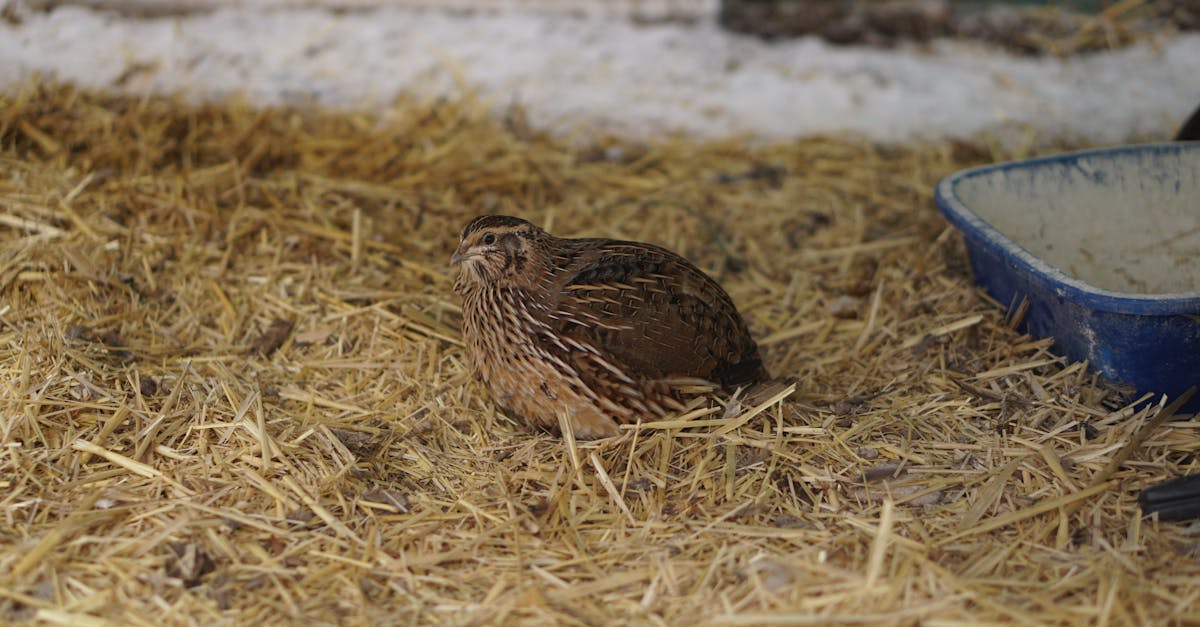
Quail farming works almost anywhere in India because Japanese quail (Coturnix coturnix japonica) are small, hardy and need no outdoor land, but it earns a living only if you have buyers for eggs or meat and keep feed cost and mortality under control. Margins per bird are thin; a TNAU model project works out to about ₹3 profit per bird per year, so income depends on volume and on selling direct rather than through a trader.
The birds mature fast: laying starts at about 6 to 7 weeks and meat birds are sold at about 5 weeks. The fast cycle helps cash flow, but it also means a feed or disease problem shows up in weeks.
Types of quail and what is legal
- Japanese quail is the commercial bird. It was brought to India in 1974 and ICAR-CARI (Central Avian Research Institute, Izatnagar) has been the main centre for its breeding and production technology since.
- Wild black-breasted (rain) quail and other wild species are protected under the Wild Life (Protection) Act. Do not buy, trap or breed them. Farm only Japanese quail from a hatchery.
- Rules for selling eggs and meat (FSSAI registration, local trade licence, slaughter and dressing rules) vary by state; ask your district animal husbandry office before you start commercial sales.
Strains and performance
| Strain | Source | Reported performance | Use |
|---|---|---|---|
| CARI Uttam | ICAR-CARI | 150 to 155 g at 4 weeks, about 240 g at 5 weeks; feed 25 to 28 g per day; hatchability 70 to 75% of eggs set | Meat (broiler quail) |
| Nandanam Quail-2 | TANUVAS, Tamil Nadu (per TNAU) | About 160 g in 5 weeks | Meat |
| Layer lines (CARI, PES, WB in an ICAR study) | ICAR and state institutes | Peak production 49 to 80% depending on line; CARI line started laying at about 43 days | Eggs |
- A Japanese layer is quoted at about 250 eggs a year and an adult at about 250 g; the Indian (non-commercial) type about 100 eggs. An egg weighs about 10 g. Actual flock production depends on line, feed and lighting, so ask the hatchery for flock records.
Housing and space
| Age | Deep litter, cm2 per bird | Cage, cm2 per bird |
|---|---|---|
| 0 to 4 weeks | 75 | 75 |
| 5 to 6 weeks | 200 | 150 |
| Above 6 weeks | 250 | 175 |
- Cages cost more to build and run; deep litter is cheaper and easier for rural farmers, per ICAR work. Cages keep birds cleaner and eggs unbroken.
- Males can peck and injure other birds in crowded pens; keep stocking at the figures above.
Feed
| Stage | Protein % | Energy (kcal/kg) | Calcium % |
|---|---|---|---|
| Broiler starter, 0 to 4 weeks | 27 | 2,800 | 0.8 |
| Broiler finisher, 4 to 6 weeks | 24 | 2,800 | 0.6 |
| Layer starter, 0 to 4 weeks | 24 | 2,750 | 0.8 |
| Layer grower, 4 to 5 weeks | 20 | 2,750 | 0.6 |
| Layer, above 6 weeks | 19 | 2,700 | 3.0 |
- Quail need a higher protein feed than chickens, so chicken feed does not suit them. Feed is the largest running cost; an ICAR layer study recorded 1.33 to 1.98 kg of feed per dozen eggs depending on diet.
- Quail eggs hatch in 18 days: 99.5 degrees F with 60% humidity and turning for days 1 to 14, then 98.5 degrees F with 70% humidity and no turning for the last days (TNAU).
Health
- TNAU states quail are sturdy and need no routine vaccination; the main disease named is ulcerative enteritis. Clean litter, dry housing and clean water are the main prevention.
- Call a veterinarian or your KVK for sudden deaths rather than treating with antibiotics on your own. Buy chicks from a recognised hatchery to avoid carrying in disease.
💡 Tip: Start with 200 to 500 birds and sell for a few cycles before building a large shed. Line up at least two regular buyers (hotels, meat shops, egg retailers) first, because quail eggs and meat are a niche product in most towns.
Cost and returns
- Egg price: secondary sources quote about ₹4 to ₹7 per egg, which is about ₹48 to ₹84 per dozen, and live adult birds at roughly ₹16 to ₹25 each in rural areas, higher in towns. These figures vary by town and are not official; check local rates.
- Feed against egg value (illustration): at 1.33 to 1.98 kg of feed per dozen and an assumed feed price of ₹30 per kg, feed alone costs about ₹40 to ₹59 per dozen. Against ₹48 to ₹84 per dozen sale value, the margin before labour, chicks and housing is small, and a feed price rise can erase it.
- Model project: a TNAU cage-system model for 26,000 birds shows about ₹92,000 capital, ₹3.2 lakh operating cost, ₹4.24 lakh revenue and a net of about ₹84,000, which is about ₹3.2 per bird (old figures, not adjusted for current prices).
Market and risks
- Buyers are hotels, restaurants, meat shops, egg retailers and households. Demand is local and uneven, and quail eggs have a shorter shelf life than chicken eggs.
- Risks: feed price swings, chick mortality, a buyer base that is too small, and licence or hygiene rules for selling dressed meat.
- For group sales and feed purchase through an FPO, a KCC for working capital, and any state poultry scheme, use the subsidy finder and ask your state animal husbandry department for current rates.