
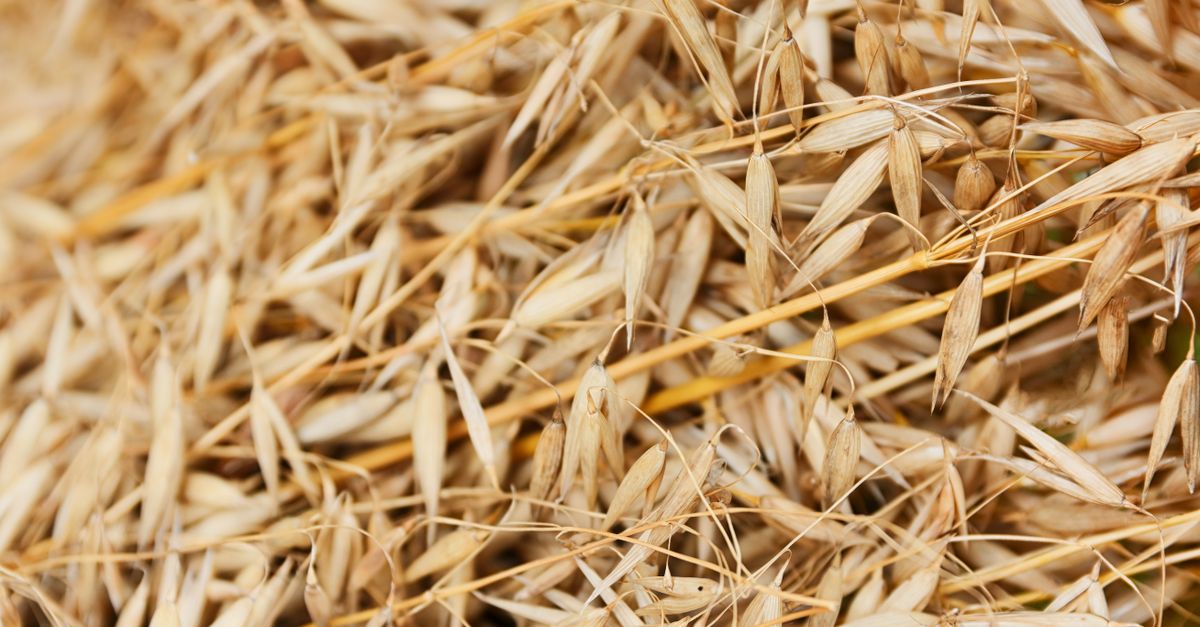
Oats works in India mainly as a winter (rabi) green fodder for dairy animals, not as a grain crop for the breakfast-cereal market. About 0.25 million hectares are under fodder oats, 34% in Uttar Pradesh, 20% in Punjab, 16% in Bihar, 9% in Haryana and 6% in Madhya Pradesh. It needs cool weather, a November sowing and a few irrigations.
Oat grown for human food needs dehulling and processing, and no verified Indian farm-gate price or buy-back arrangement for grain oats was found. Plan on fodder, hay or silage for your own animals or local dairies, and check with a processor in writing before growing for grain.
Where it grows in India
- Main belt: northern, north-western and central India, with recent spread to eastern states. Oats is a cool-season crop, so it is sown after the monsoon (October to December).
- Soil: most soils suit it, from sandy loam to silty loam. Avoid alkaline or waterlogged fields. The Assam package recommends well-drained silty loam or sandy loam, and oats can follow sali rice there.
- Water: it can be grown rainfed. Under irrigation, give one watering right after sowing if the soil is dry, one at maximum tillering (about 45 days after sowing) and one after the first cut.
Varieties
| Variety | Released by | Traits | Suited to |
|---|---|---|---|
| Kent | PAU Ludhiana, 1978 | Dual-type, lodging resistant, 550 to 570 q/ha green fodder; still the most-indented variety | North and central plains |
| OS-6, OS-7 | CCS HAU Hisar, 1982 and 1984 | Single-cut; OS-7 550+ q/ha | Haryana, Punjab, western UP |
| HJ-8 | CCS HAU Hisar, 1998 | Dual-type, fast growth, 600 to 680 q/ha | North India |
| JHO-822, JHO-851 | ICAR-IGFRI Jhansi, 1989 and 1998 | Multicut; JHO-851 regrows well | Central and north India |
| UPO-212 | GBPUAT Pantnagar, 1990 | Multicut, 550 to 600 q/ha, tolerates seed shattering | UP, Uttarakhand, plains |
| JO-1 | JNKVV Jabalpur, 2005 | Multicut, 550 to 600 q/ha | Madhya Pradesh |
| RO-19 (Phule Harita) | MPKV Rahuri, 2007 | Multicut, disease resistant; 320 to 340 q/ha in Assam recommendation | Maharashtra, Assam |
| JHO-99-2 | ICAR-IGFRI Jhansi, 2005 | Quality fodder; 320 to 340 q/ha in the Assam package (confirm cut type with your seed supplier) | Central and eastern India |
| SKO-7, SKO-20 | SKUAST Srinagar, 2005 and 2009 | Dual-type, disease resistant | Kashmir and cold hills |
- Single-cut types are harvested once at about 50% flowering. Multicut types get the first cut at 40 to 45 days and later cuts every 30 to 35 days. Dual-type varieties can be cut for fodder or left for seed.
- More than 60 varieties have been released since 1976, but Kent, UPO-212, JHO-822 and SKO-7 account for over 75% of breeder seed produced. Buy certified seed from a state seed corporation, an ICAR centre or a state agricultural university, and ask which variety fits your cutting plan.
Sowing and seed
- Time: a Hyderabad trial (2016-17 and 2017-18) found the best window was the second fortnight of October to the first fortnight of November, with late November giving less. In the north, sowing from mid October to November is common; the Assam package allows up to December. See the crop calendar.
- Seed rate: 100 kg per hectare (40 kg per acre) for fodder, in rows 25 to 30 cm apart at 4 to 5 cm depth, on a fine, firm seedbed. The Hyderabad trial found no yield difference between 80 and 100 kg per hectare with JHO-822 and Kent. For seed crops, 50 to 60 kg per hectare is used.
- Weeding: one weeding 3 to 4 weeks after sowing.
Nutrition
- Standard dose: 80 kg N, 60 kg P2O5 and 40 kg K2O per hectare (32, 24 and 16 kg per acre). Under irrigation, split the nitrogen into three parts, applying it after each cut. Rainfed crops get it as one basal dose.
- Higher nitrogen: 120 kg N per hectare (48 kg per acre) gave about 30 t/ha green fodder in a review of Indian trials. Some recommendations use 120:40:40 with one third of N and all P and K at sowing and the rest at about 32 days and after the first cut.
- Organic manure: 5 t per hectare (2 t per acre) of farmyard manure before sowing.
- Assam package (lower, rice-fallow conditions): 40:20:20 kg per hectare of N, P2O5 and K2O, with 20 kg N per hectare as top dressing after the first cut. Have the soil tested and use the state recommendation; see fertilizers.
Pests and diseases
- Disease-resistant varieties are listed against anthracnose, crown rust, loose smut, powdery mildew and barley yellow dwarf virus. Armyworm, stink bug, wireworm and aphids are the insects named. Choose resistant varieties first; for any spray, follow the label and ask the local KVK. See pests.
- Oats fodder is fed fresh, so observe the label waiting period before cutting.
Harvest and yield
- Cutting height: 8 to 10 cm above the ground so that multicut crops regrow.
- Green fodder: the national review gives 50 to 60 t per hectare as productivity for good varieties (20 to 24 t per acre), with 12 to 15 t dry fodder per hectare. NDDB quotes 35 to 40 t per hectare, and the Assam package gives 32 to 34 t per hectare (13 to 14 t per acre) for RO-19 and JHO-99-2 with 5 to 6 t dry matter. The wide range reflects variety, sowing date, nitrogen and number of cuts, so budget on the lower figures.
- Quality: crude protein is 8 to 10% (NDDB) or about 10 to 11% of dry matter (national review). Oats is suitable for silage and hay.
- Seed: 2 to 3 t per hectare (0.8 to 1.2 t per acre). One fifth of a hectare grown for seed gives enough seed to sow one hectare.
💡 Tip: Match the cut to the animal. Early cuts at 40 to 45 days give softer, more digestible fodder; a single cut at 50% flowering gives more bulk. Wilt and ensile surplus rather than letting it overmature.
Cost and returns
- Verified Indian cost and price data for oats fodder were not available for 2026. Work it out for your own farm: green fodder per acre (for example 12 to 14 t at the Assam package yield) multiplied by what you pay for green fodder locally, minus seed (40 kg), fertiliser, irrigation and labour.
- The value of oats is mostly in the milk. A winter green fodder cut in 45 to 70 days fills the gap before summer fodder, and it can replace bought concentrate or purchased fodder. Ask the nearest dairy union or KVK for the current price of green fodder and silage.
- Seed sales need certification. Check with your state seed certification agency before selling seed.
Market and risks
- Fodder oats is mostly used on the farm or sold locally to dairy keepers; there is no mandi price series for it. Silage and baled hay can be sold to larger dairies.
- Grain oats for rolled oats and breakfast cereal depend on processors; get a written offer on price, grade, and delivery before sowing.
- Late sowing, a warm spell at flowering and lodging in heavily fertilised crops are the main field risks. A crop loss from drought or hail can be insured; see PMFBY for what is notified in your district, and KCC for credit.
Sources
- Analyzing trends and future projections in fodder oats (Avena sativa L.) for quality seed production in India
- Effect of time of sowing, seed rate and cultivar on oat green fodder, dry matter and crude protein yield (Indian Journal of Animal Nutrition)
- Assam Agricultural University, Package of practices for rabi crops of Assam: Oats (2021)
- Nutrient management for fodder oats in India: an overview
- NDDB, Oats (Avena sativa)