
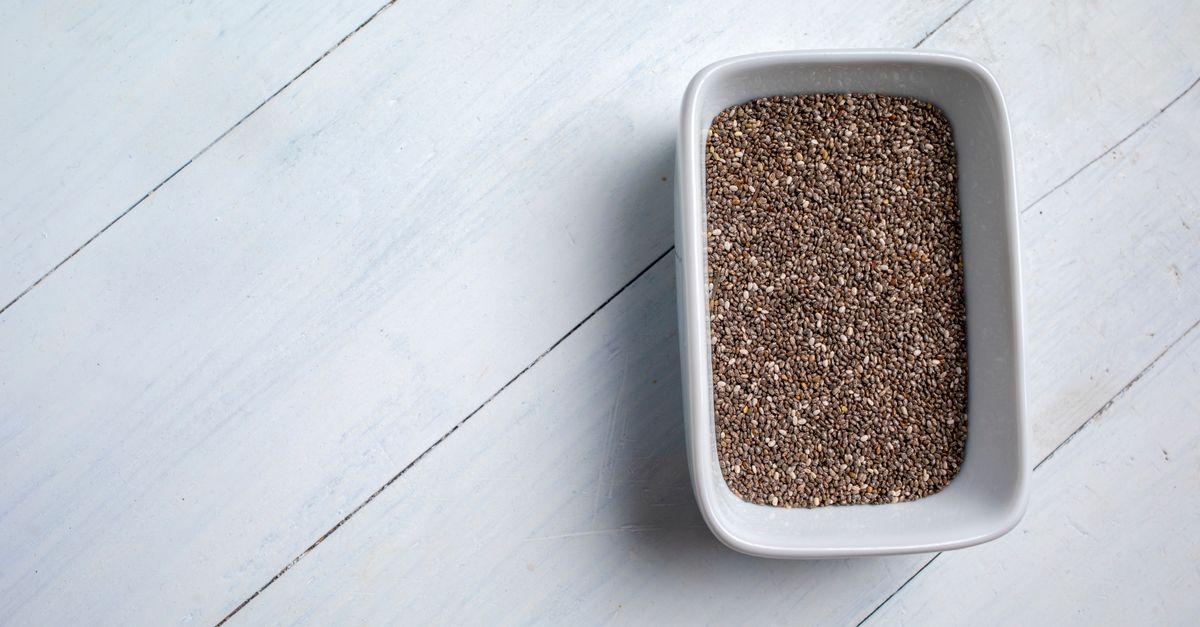
Chia (Salvia hispanica) can be grown in India, mainly as a low-input crop on light to medium soils in the drier parts of Maharashtra, Madhya Pradesh, Karnataka, Gujarat, Rajasthan, Andhra Pradesh and Haryana, where small pockets of cultivation have started. It is a short-day plant sensitive to temperature and day length, so sowing date decides the yield. ICAR trials give modest yields of 6 to 8 quintal per hectare, and the seed price has been falling, so it is a crop to test on a small block, not to bet the farm on.
The strongest Indian evidence comes from ICAR-National Institute of Abiotic Stress Management (NIASM), Baramati, which developed a package of practices from experiments in 2021 to 2024 for shallow black soils in drought-prone areas. Washim district (Maharashtra) has also published its own chia guidance.
Climate, soil and sowing time
Chia suits rocky basaltic, sandy and medium black soils, including shallow black soils, under rainfed or irrigated conditions. It needs good drainage. District Washim lists soil pH 6 to 8, minimum temperature about 11 degrees C and maximum about 36 degrees C, and a crop duration of 90 to 120 days.
Two different sowing windows appear in official material, and they should not be mixed up:
| Source | Sowing window | Spacing and seed rate |
|---|---|---|
| ICAR-NIASM Baramati | 1 August to 15 September (best yield in trials) | 60 x 30 cm for July to September sowing, 50 x 30 cm for October to November; 2 kg per hectare by line sowing, 2.5 to 3 kg broadcast |
| District Washim guidance | Rabi, 1 October to 15 December | 45 x 30 cm, depth 1.5 cm; 1.5 to 2 kg per hectare |
The ICAR trial result is that the highest seed yields (about 793 to 811 kg per hectare) came from sowing between 1 August and 1 September. A rabi sowing from October onward is possible, but expect a lower yield and use irrigation. Today is 2 October, so for most farmers the kharif window has closed; plan next season's sowing now.
Seed and planting
Chia seed is tiny, so the seed rate is only 1.5 to 3 kg per hectare (about 0.6 to 1.2 kg per acre). At 60 x 30 cm spacing you have roughly 55,000 plants per hectare (about 22,000 per acre). Mix the seed with sand for even sowing and sow shallow. The package also describes transplanting 15-day-old seedlings. India has no widely notified chia variety; seed usually comes from private suppliers, so buy only from a source you can trace and ask for the purity certificate. Washim guidance quotes purity of 99.5 to 99.9 per cent and moisture below 8 per cent.
Nutrition and irrigation
ICAR-NIASM recommends 90:60:75 kg N:P2O5:K2O per hectare (about 36:24:30 kg per acre), with nitrogen split as 50 per cent basal and 25 per cent each at 30 and 45 days after sowing. For rabi crops, about 350 mm of supplemental irrigation (60 per cent of reference evapotranspiration) is recommended, and spraying 0.5 per cent potassium nitrate at 30 and 45 days after sowing allowed a saving of about 40 per cent of the water in the trials. Washim guidance says the crop needs 2 to 6 irrigations depending on climate, rainfall and growth stage. Use drip or sprinkler irrigation to apply water in small amounts; waterlogging damages the crop.
Pests and diseases
The ICAR package does not list pest or disease control, and no verified Indian pest list for chia was found. Scout weekly, and contact your KVK or agricultural university before spraying anything. See the pests page for identification help. Because the crop is new, avoid applying chemicals that are not registered for it.
Harvest and yield
Harvest when most spikes have dried; the crop takes 90 to 120 days. ICAR-NIASM trial data: 628 kg per hectare in an intercropped system, and 793 to 811 kg per hectare with the best sowing dates, which is about 6.3 to 8.1 quintal per hectare (250 to 325 kg per acre). Washim guidance states 10 to 12.5 quintal per hectare, which is higher than any published trial figure, so plan on the lower numbers.
Cost and returns
Washim guidance gives a cultivation cost of ₹37,500 to 40,000 per hectare (about ₹15,000 to 16,000 per acre). No mandi price series for chia was found; the only price data are trade figures from Tridge. India's export price was US$2.06 to 4.44 per kg in 2024, down from US$2.78 to 8.34 in 2023. At roughly ₹85 per US dollar (assumed here), that is about ₹175 to 380 per kg.
| Per hectare | Low case | High case |
|---|---|---|
| Yield | 628 kg | 811 kg |
| Price (export-based, assumed) | ₹175 per kg | ₹380 per kg |
| Gross | about ₹1.1 lakh | about ₹3.1 lakh |
| Cost (Washim) | ₹40,000 | ₹37,500 |
| Net | about ₹0.7 lakh | about ₹2.7 lakh |
Per acre, multiply by 0.4: roughly ₹28,000 to ₹1.1 lakh. The farm-gate price a farmer actually gets will usually be below the export figure, and that price assumption is the weak link. Your own labour, land and transport are not counted.
Market and selling
- There is no MSP for chia, so check mandi rates and ask buyers for written prices before sowing. Compare with MSP crops on the MSP page.
- Export prices fell between 2023 and 2024, while India's import price rose in 2024, so demand and sourcing are shifting. Do not assume a high price will return.
- Be careful of seed sellers offering contract buy-back at a fixed rate, and of "chia" seed sold to you that is actually another Salvia or a mixed lot. Insist on seed identity and a written agreement.
- Selling collectively through an FPO helps reach processors and exporters.