
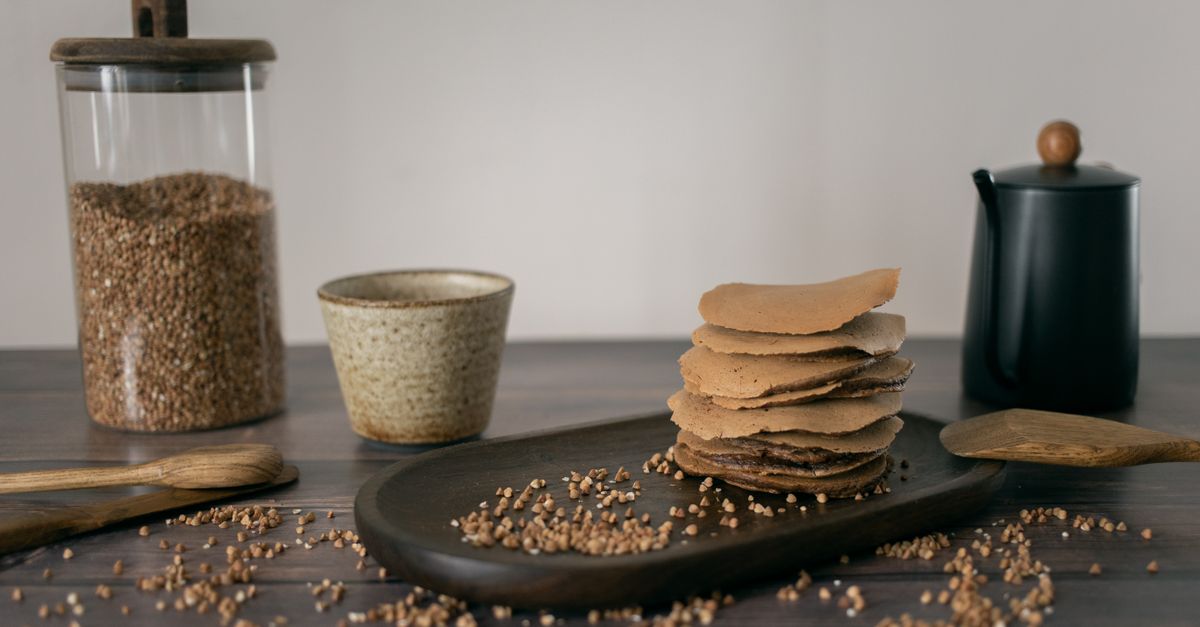
Buckwheat (kuttu, ogal, phaphra) is a realistic short-season crop for Himalayan and hill farmers in Jammu and Kashmir, Himachal Pradesh, Uttarakhand, Sikkim, Arunachal Pradesh, Meghalaya and neighbouring states, and in a few southern hills such as the Nilgiris and Palani. It matures in roughly 75 to 90 days in cool upland conditions, needs little input, and sells at a premium as kuttu ka atta during religious fasts.
It is not a plains crop: it dislikes heat and hot dry winds. Yields are modest, flour quality and storage are the real market problems, and the grain is a niche product, so sell through a known buyer.
Where it grows and what it needs
- States: ICAR-NEH lists Jammu and Kashmir, Himachal Pradesh, Uttarakhand, Sikkim, Arunachal Pradesh, West Bengal, Meghalaya, Assam, Manipur and Nagaland, plus the Nilgiris and Palani hills of Tamil Nadu.
- Altitude and climate: a Central Agricultural University review gives a range of 500 to 4,200 m above sea level, moist and cool weather, and sensitivity to high temperature and hot dry winds, especially when moisture is short.
- Soil: well-drained sandy loam, loam or silt loam; tolerant of acid soils and of poor, infertile land, with good drainage essential.
- Two species: common buckwheat (Fagopyrum esculentum, kuttu/ogal/kathu) with larger grains, suited to lower altitudes; tartary buckwheat (F. tataricum, phaphra/chabri) with tougher husks, better adapted to high altitude and cold, and richer in rutin. Tartary flour and groats turn rancid quickly and should be used fresh; in some hill areas the grain is heated in boiling water to remove bitterness before use.
- Pollination: flowers need insects (bees, hoverflies and others) for good seed set, and the long flowering gives nectar for honey. Keep bees if you can, and avoid spraying during bloom.
Varieties
| Variety or accession | Where reported | Note |
|---|---|---|
| Himpriya | Named in the CAU review and in ICAR-NEH Umiam trials | 1.53 t/ha in the Meghalaya hill trials |
| VL Ugal-7, PRB-1, Himgiri | Named as recommended varieties in the CAU review | Check the current seed source with your KVK or state agricultural university |
| IC377275, IC26591, IC14890, IC37288 | ICAR-NEH Umiam germplasm accessions | 1.89, 1.71, 1.63 and 1.55 t/ha in hill-slope trials with improved practices; accessions, not commercial varieties |
| Gossigaon local | Meghalaya landrace | 9.7 q/ha (October sowing, 132 days) and 11.0 q/ha (November sowing, 143 days) |
Seed quality is a common limit. Use seed from a government or university source, and keep your own seed from a well-pollinated field only after checking germination.
Sowing, seed rate and spacing
- When: in Himalayan hill areas sowing is generally in the cool season; the CAU review gives October to November. At ICAR-NEH Meghalaya, October to December sowing gave economic yields at the mid-hills (Ribhoi), while in one experiment at the institute farm, April and May sowings gave only about 0.12 to 0.13 t/ha because of heavy rain. Use local advice on sowing date for your altitude.
- Seed rate: 40 to 50 kg per hectare (16 to 20 kg per acre) in the CAU review; a seed treatment with thiram or captan at 2.5 g per kg of seed is suggested against seed-borne disease.
- Method: drilling or broadcasting. Rows 30 to 40 cm apart with 6 to 8 cm between plants gave the best production. Thin extra plants about 20 days after sowing.
- Where it fits: ICAR-NEH points to rice and maize fallows, where pulses are hard to grow, as a good place for buckwheat.
Nutrition and water
- Organic matter: well-decomposed FYM or compost at 10 to 15 t per hectare (4 to 6 t per acre) mixed in at land preparation.
- Fertilizer (CAU review): 40 to 50 kg N, 30 to 40 kg P2O5 and 20 to 30 kg K2O per hectare as a basal dose, that is about 16 to 20 kg N, 12 to 16 kg P2O5 and 8 to 12 kg K2O per acre. Base the dose on a soil test; see fertilizer guidance.
- Phosphorus: ICAR-NEH describes buckwheat as an efficient phosphorus taker on acid soils, which helps on low-phosphate hill slopes.
- Water: drought-tolerant with limited water need; irrigation helps yield, and flowering and seed set are the critical stages. In wetter hills the crop is grown rain-fed.
Weeds, pests and diseases
- Weeds: the crop grows fast and shades weeds; remove weeds 20 to 30 days after sowing.
- Lodging: heavy vegetative growth makes stems fall over; earthing up gives support.
- Diseases listed in the review: leaf spot, smut, stem rot, brown leaf spot, powdery mildew, downy mildew and rust. Seed treatment is the first line; for sprays, follow the label and your KVK.
- Insects listed: bruchids, cutworm, grain moth, aphids and storage beetles. Take local advice and avoid spraying in bloom to protect pollinators. See the pest guide.
- ICAR-NEH also notes fewer disease and pest problems on low-input hill slopes.
Harvest, yield and storage
- Maturity: 75 to 90 days in the CAU review. In the Meghalaya trial, October and November sowings took 132 to 143 days, so duration depends heavily on sowing date and cold.
- When to cut: when about 75% of the seeds are ripe, to limit shattering. Maturity is uneven, so some farmers harvest in stages.
- Yield: the CAU review gives 10 to 15 q per hectare (4 to 6 q per acre). Meghalaya trials gave 9.7 to 11.0 q/ha with a local type, and 1.5 to 1.9 t/ha with the best accessions and a full package. Expect the lower range on poor, unmanaged land.
- Storage: sun-dry to 14 to 16% moisture before storage. Buckwheat flour spoils quickly, so mill only what will be sold within a short time.
- Straw and green biomass: the Meghalaya trial recorded about 10 q/ha of straw; green leaves are used as fodder.
Cost and returns
No verified Indian cost-of-cultivation or farm-gate price series for kuttu was found for this guide. The arithmetic below uses the published yield range and an assumed price per quintal, so replace the price with the rate your local buyer or mandi offers (see mandi bhav) and subtract your own costs for seed, labour and manure.
| Yield per acre | Gross at assumed ₹3,000/q | At ₹5,000/q | At ₹8,000/q |
|---|---|---|---|
| 4 q (10 q/ha) | ₹12,000 | ₹20,000 | ₹32,000 |
| 6 q (15 q/ha) | ₹18,000 | ₹30,000 | ₹48,000 |
Because the crop takes only a short window, its value is often as a second or contingency crop on fallow land, not as a main earner. The Meghalaya work argues it raises cropping intensity on rice and maize fallows.
Market, flour safety and selling
- Demand: kuttu ka atta is sold at premium prices during religious fasts, and the crop has health-food interest because it is gluten-free. Leaves and flowers are also used for rutin extraction.
- Safety risk: kuttu flour has been linked to mass food poisoning during Navratri. In September 2025 an estimated 150 to 200 people fell ill in north-west Delhi after eating buckwheat flour bought from a market. In March 2024, FSSAI told officials to step up inspection of kuttu atta, singhada atta and samak rice at festival time, noting past poisonings were linked to old stock contaminated with fungal toxins.
- What this means for a grower or seller: dry the grain properly, store it cool and dry, never mix old stock into fresh flour, and mill in small batches close to sale. Selling flour needs food-safety registration or licence; check with your district food safety officer. Selling clean grain to an established miller is simpler.
- No MSP: buckwheat is not among the crops on the MSP list, so agree the price with the buyer in writing before sowing a large area.
- Collective selling: an FPO or hill cooperative can aggregate small lots and reach millers; see export buyers for specialty buyers.
- Subsidy and support: no verified buckwheat-specific subsidy rate was found. Ask the state agriculture department and check the subsidy finder. For insurance see PMFBY.
Sources
- Rangappa et al., Buckwheat cultivation for cropping intensity and income security of low-input hill agro-ecologies, Indian Farming 75(8), August 2025 (ICAR-NEH, Umiam)
- Sah, Sen and Debnath, Buckwheat, a potential coarse grain crop for food and nutritional security, Int. J. Bio-resource and Stress Management 3(2), 2012 (CAU Pasighat)
- The Week, Navratri food poisoning in Delhi after buckwheat flour (23 September 2025)
- Sentinel Assam, FSSAI heightens food safety vigilance during festival season (March 2024)