
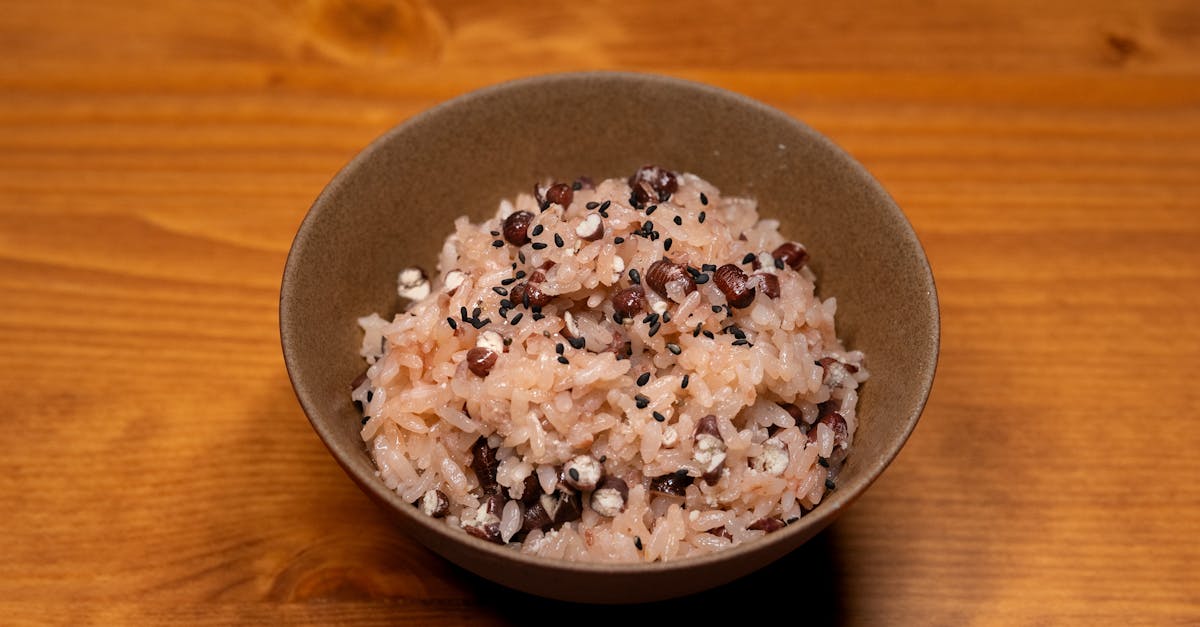
Red rice is grown wherever paddy is grown, but the premium comes only from a recognised traditional type, sold as unpolished rice through your own channel. Traditional red varieties usually yield much less than modern paddy, and Down To Earth reported that demand outside health-conscious buyers was thin, so plan the sale before you plant.
"Red rice" is not one variety. It covers many landraces and a few GI-protected types, each with its own region, duration and rules. This guide covers Kerala's Palakkadan Matta and Navara (Njavara) and Tamil Nadu's Mappillai Samba. Ask your state agriculture university or KVK for the types adapted to your district.
Main red rice types in India
| Type | Where | Facts |
|---|---|---|
| Palakkadan Matta | Palakkad district, Kerala | GI registered 20 November 2007. Ten approved varieties: Aryan, Aruvakkari, Chitteni, Chenkazhama, Chettadi, Thavalakanna, Eruppu, Poochamban, Vattan Jyothy and Kunjukunj. A bold red rice; only these varieties grown in Palakkad can be sold under the name. |
| Navara (Njavara) | Parts of Palakkad, Kerala | GI registered 20 November 2007. Black-glumed and golden-yellow-glumed types, a medicinal rice used in Ayurvedic treatment. Only registered farmers may grow and sell it under the GI. |
| Mappillai Samba | Tamil Nadu | A traditional red variety of about 155 to 160 days that TNAU's indigenous knowledge pages list as a variety lost after the Green Revolution. |
- Buy seed only from a source that can name the variety and its season (a state seed agency, KVK or farmer network), and keep your own seed lots separate so the variety stays pure.
- If you want to market under a GI name, check the GI rules and registration first. Using a GI name without being registered is misleading and can attract action under the GI law.
Season, nursery and planting
- Season: red rice follows ordinary paddy, so it needs the same warm, humid climate and assured water. The duration decides the season: Mappillai Samba, at 155 to 160 days, is a long-duration rice, so it occupies the field much longer than a short-duration variety. The Njavara trial below was grown in the Kerala summer season. Confirm the right season for your variety with your KVK.
- Nursery (TNAU crop production guide, transplanted rice): 20 cents (800 sq m) of nursery for one hectare. Seed rate is 30 kg per hectare for long-duration, 40 kg for medium and 60 kg for short-duration varieties (about 12, 16 and 24 kg per acre). Transplant at 35 to 40 days for long-duration, 25 to 30 days for medium and 18 to 22 days for short-duration varieties.
- Spacing (TNAU): for long-duration varieties, 20 x 15 cm (33 hills per sq m) on medium and low fertility soil and 20 x 20 cm (25 hills per sq m) on high fertility soil, with 2 seedlings per hill and shallow planting of about 3 cm.
- Spacing in Njavara trials (Thiruvananthapuram): single 8-day seedlings at 20 x 20 cm (SRI), two 12-day seedlings at 20 x 20 cm, or three 18-day seedlings at 15 x 10 cm (package of practices), against broadcast pre-germinated seed in conventional practice.
Nutrition and crop care
- TNAU's blanket dose for medium and long-duration modern varieties is 150 kg N, 50 kg P2O5 and 50 kg K2O per hectare. That is a modern-variety dose. The Njavara trial applied 40 kg N, 20 kg P2O5 and 20 kg K2O per hectare (16, 8 and 8 kg per acre) as organic, inorganic or integrated sources, and integrated sources gave higher grain yield than purely organic or inorganic ones.
- The same trial noted lodging under conventional practice. Ask your KVK or the agriculture university for the dose that suits your variety.
- For pests and diseases (stem borer, planthopper, blast, sheath blight) follow your state's paddy package of practices. Ask your KVK whether a schedule exists for your variety. Organic-style IPM suits the premium market. See pests and fertilizers.
Harvest, yield and processing
- Yield: in the Karamana (Thiruvananthapuram) Njavara trial of summer 2007 and 2008, grain yield ranged from about 650 to 1,040 kg per hectare across the establishment methods, that is roughly 260 to 420 kg per acre. Conventional establishment gave the highest yield, and SRI the most root growth. That is far below modern paddy, which is why red landraces need a premium price.
- Processing: "red rice" is sold with the bran on, which means careful hulling or light milling, not polishing. Ask a local miller for the outturn of your variety and the hulling charge before you price it.
💡 Tip: Test your sale before the whole field is committed. Sell one season's rice in 1 kg and 5 kg packs to known buyers, and record the price, packing cost and what stays unsold.
Cost and returns
- Ordinary paddy price reference: in Palakkad in October 2025 the open-market paddy rate was reported at ₹20 per kg against a government procurement price of ₹30 per kg, with delays in procurement forcing sales at a loss. Check current rates on mandi bhav and the MSP page.
- Break-even arithmetic (assumptions): if your ordinary paddy gives 1,600 kg per acre (4 t per hectare) at ₹30, you earn ₹48,000 per acre. A red landrace giving 400 kg of paddy per acre must sell for ₹120 per kg of paddy to match it (₹48,000 / 400 kg), before counting the cost of hulling, packing and selling. At 1,000 kg per hectare against 4,000 kg for ordinary paddy, the red type needs about four times the price to break even.
- Retail price signal: Down To Earth reported red and other traditional rice sold at ₹65 to ₹120 per kg to health-conscious consumers in Tamil Nadu, an older article, so check current shelf prices. That is a retail price, and the farmer's share is lower.
Market and risks
- The same Down To Earth report said traditional rice had high demand among health-conscious consumers but hardly any in open markets because of low awareness, and noted that red and black rice needs longer cooking and soaking. Selling needs education and a brand, not just production.
- Routes: direct to consumers, organic and wholefood shops, and FPO or farmer-company packs. See FPO and export buyers.
- Do not sell ordinary rice labelled as Palakkadan Matta, Navara or any GI name. It misleads buyers, can attract action under the GI law and is the fastest way to lose them.
- Check PMFBY cover for paddy in your district and subsidy finder for organic and farmer-company support. Ask your state agriculture department about support for traditional varieties and organic farming.
Sources
- Tattamangalam, GI registration for Palakkadan Matta and Navara rice (secondary report of the GI Registry entry)
- Rani and Sukumari, Root growth, nutrient uptake and yield of medicinal rice Njavara under different establishment techniques and nutrient sources (Cropping Systems Research Centre, Karamana)
- TNAU Agritech Portal, traditional rice varieties (Mappillai Samba)
- TNAU Crop Production Guide, Agriculture 2020 (transplanted rice)
- Down To Earth, Goodness of the unpolished
- Onmanorama, Palakkad farmers struggle to sell paddy (31 October 2025)