Coconut Farming Guide for Coastal States in India
Why Coastal States Are Ideal for Coconut Cultivation
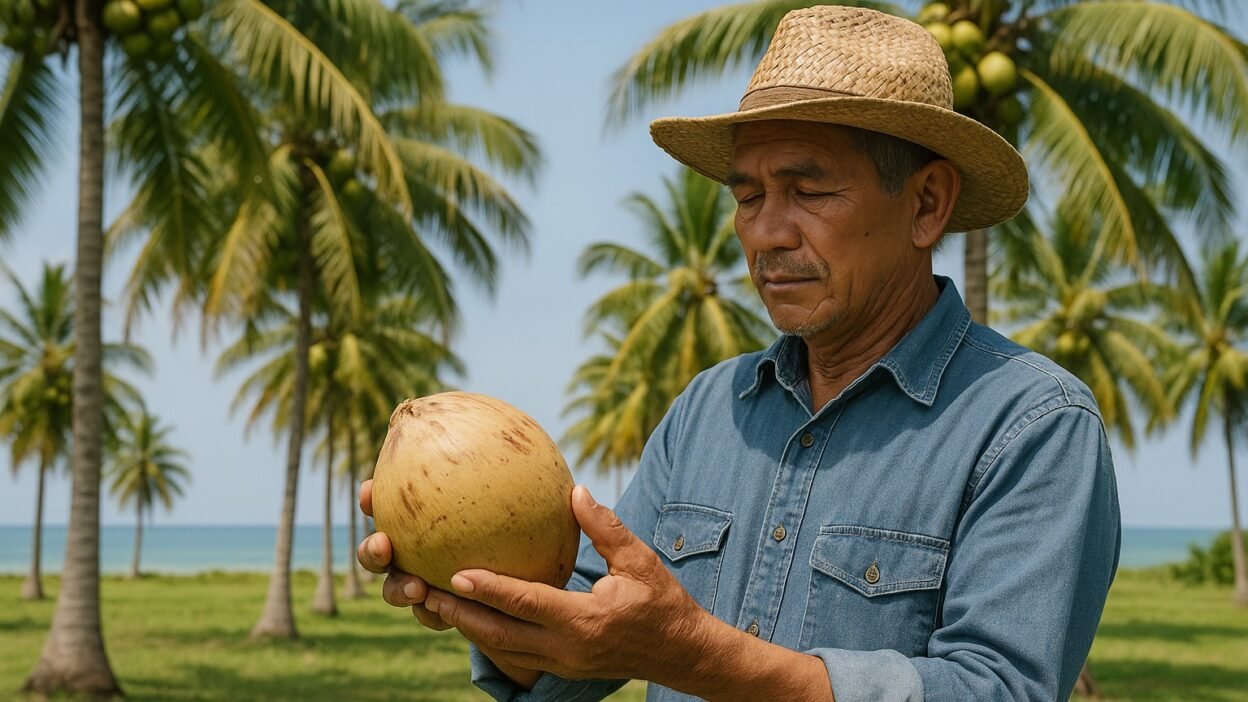
India’s coastal states—such as Kerala, Tamil Nadu, Andhra Pradesh, Karnataka, Goa, Maharashtra, Odisha, and West Bengal—offer the perfect environment for coconut cultivation. Coastal humidity, sandy loam soils, and consistent rainfall make these regions ideal for growing high-yielding coconuts.
Best Climate and Soil for Coconut Farming
Climate Requirements
- Warm and humid tropical climate
- Annual rainfall of 1000 mm to 3000 mm
- Temperature range between 21°C to 32°C
Soil Preferences
- Well-drained sandy loam or laterite soil
- pH between 5.5 and 7.0
- Good water-holding capacity with minimum waterlogging
Choosing the Right Coconut Variety
Selecting the right coconut variety can greatly impact your yield. Popular options for coastal states include:
- Tall varieties: West Coast Tall, East Coast Tall
- Dwarf varieties: Chowghat Orange Dwarf, Malayan Dwarf
- Hybrids: Kera Sankara, Kalpa Sreshta
Land Preparation and Planting
Steps for Preparation
- Plough and level the land
- Provide proper drainage to avoid waterlogging
- Mark pit locations at spacing of 7.5m x 7.5m (for tall varieties)
Planting Tips
- Dig pits of 1m x 1m x 1m size
- Fill pits with a mixture of topsoil, compost, and sand
- Plant seedlings at the onset of monsoon for better root establishment
Care and Maintenance
Irrigation
- Provide irrigation every 5–7 days during dry periods
- Use drip irrigation to conserve water
Fertilization
Apply recommended doses of NPK (Nitrogen, Phosphorus, Potassium) as follows:
- 1st Year: 100g N, 40g P, 140g K per palm annually
- Increase dosage gradually to 500g N, 320g P, 1200g K by 5th year
Pest and Disease Management
- Rhinoceros beetle: Use neem cake and trap beetles
- Red palm weevil: Keep trunks clean and use pheromone traps
- Bud rot: Treat with Bordeaux mixture or copper oxychloride
Harvesting and Yield Expectations
Coconut palms start yielding from the 6th or 7th year. Properly managed palms can offer:
- 50–80 nuts per palm annually for tall varieties
- 70–100 nuts per palm annually for hybrid and dwarf varieties
Marketing and Value Addition
Farmers can sell mature coconuts, tender coconuts, or processed products like copra, coconut oil, and fiber. Coastal areas provide access to domestic and export markets via seaports and agri-hubs.
Conclusion: Make the Most of Your Coastal Land
Coconut farming in coastal states of India can be a long-term and profitable venture if done with the right practices. With proper planning, choice of high-yielding varieties, and efficient irrigation and care, farmers can enjoy consistent income over decades.
Call to Action for Farmers
Ready to start or improve your coconut farm? Connect with your local Krishi Vigyan Kendra (KVK) for expert advice or join a farmer cooperative in your region for shared knowledge and better market access.