Biochar: The Next Big Soil Amendment for Farmers
What is Biochar?
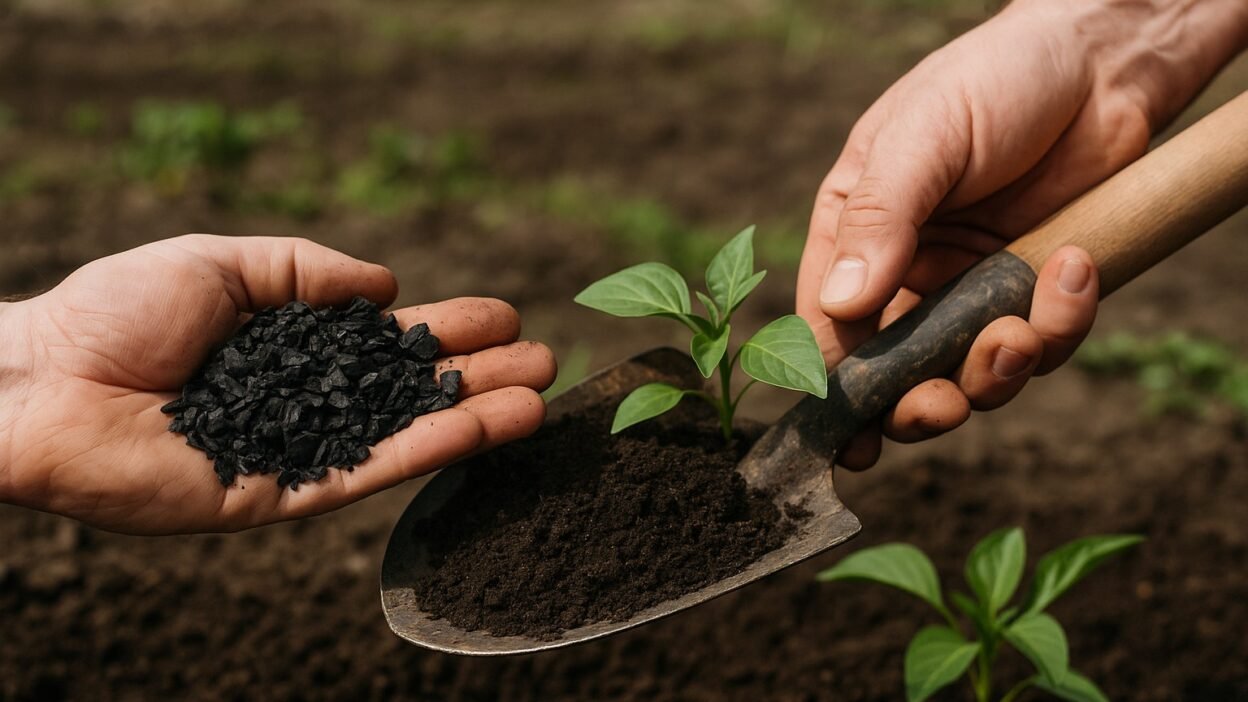
Biochar is a carbon-rich material made by heating organic waste (like crop residue or cow dung) in a low-oxygen environment—a process known as pyrolysis. Unlike ash or compost, biochar is highly stable and remains in the soil for hundreds of years.
Benefits of Biochar for Soil Health
Adding biochar to your soil can result in remarkable improvements, especially in Indian agricultural conditions. Here’s how:
- Improves soil fertility: Biochar holds nutrients like nitrogen and phosphorus, slowly releasing them to plants.
- Enhances water retention: Soils mixed with biochar retain water better, reducing irrigation needs.
- Reduces chemical dependency: Biochar reduces the need for expensive fertilizers and pesticides.
- Boosts crop yields: Many farmers report increased productivity after regular use of biochar.
- Environmentally friendly: It stores carbon in the soil and helps reduce greenhouse gases.
How to Make Biochar on Your Farm
You don’t need expensive equipment to make biochar. A simple pit kiln or drum method works well. Here’s a basic guide:
- Collect dry agricultural waste (such as husks, stalks, or cow manure).
- Place the material in a pit or metal drum.
- Partially burn it with limited oxygen—stop BEFORE it turns to ash.
- Once cooled, crush the charred material into small pieces.
- Mix it with compost or cow dung slurry before applying to the soil.
Apply Biochar for Maximum Effect
For best results, mix biochar with organic compost before incorporating into your soil. This combination activates the biochar, allowing it to absorb nutrients before planting. Recommended dosage is about 1 to 2 tonnes per acre based on soil type and crop.
Ideal Crops for Biochar Use in India
- Wheat and Rice (Paddy)
- Sugarcane
- Vegetables like tomatoes, brinjal, and onions
- Pulses and legumes
Is Biochar Right for Your Farm?
Biochar is especially useful in degraded or sandy soils common in parts of India. It benefits both small-scale organic farmers and large commercial operations. Try applying it on a test plot and compare the results—you may see stronger crop growth and reduced input costs.
Start Using Biochar Today
Biochar offers an affordable, eco-friendly way to improve soil health and increase long-term productivity. Whether you’re a smallholder or a progressive farmer, it’s time to explore this sustainable amendment.
Call to Action for Indian Farmers
Ready to transform your farm soil naturally? Start making biochar with simple tools you already have. Contact your local Krishi Vigyan Kendra (KVK) for biochar training or join farmer learning groups in your area. Your soil—and future harvest—will thank you!