How to Make Your Own Seed Bank at Home
Why Make Your Own Seed Bank?
Creating a personal seed bank empowers farmers to:
- Save money by reducing dependence on commercial seeds
- Preserve indigenous and heirloom crop varieties
- Ensure seed availability in times of crisis or shortage
- Promote sustainable, self-reliant farming practices
What You Need to Get Started
Before building your seed bank, gather the following essentials:
- Healthy, mature seeds from your own farm or trusted sources
- Paper envelopes or cloth bags for storage
- Airtight containers like glass jars or food-grade plastic boxes
- Labels and markers for identification
- A cool, dry, and dark place for storage
Step-by-Step Guide to Making a Seed Bank
1. Choose and Collect Seeds
Select disease-free and high-yielding plants from your harvest. Wait until seeds are fully mature before collecting.
2. Dry the Seeds
Spread seeds in a shaded area with good airflow. Avoid direct sunlight. Dry for up to 7–10 days until moisture is gone.
3. Clean and Sort
Remove chaff, damaged seeds, or foreign materials. Only clean and uniform seeds should be saved.
4. Pack and Label
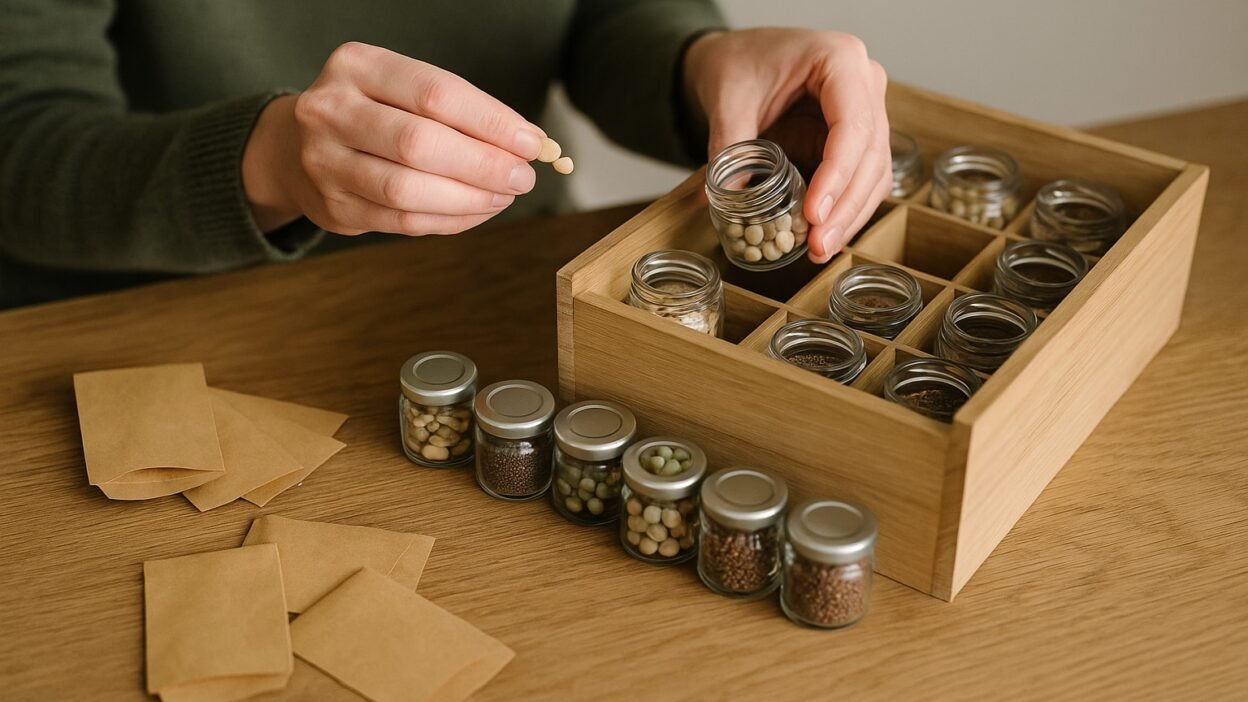
Store dried seeds in paper envelopes or cloth bags. Place them into airtight containers. Clearly label each packet with:
- Crop name
- Variety
- Collection date
- Source (field, village, etc.)
5. Store Safely
Keep containers in a dry, dark, and cool area such as a clay pot room or wooden cabinet. Check regularly for pests or fungal growth.
Tips for Successful Seed Saving
- Rotate your seed stock every 1–3 years to ensure viability
- Use neem leaves or ash as natural pest repellents in containers
- Avoid storing seeds in plastic or polythene without air circulation
Benefits for Indian Farmers
With unpredictable weather, rising seed prices, and diminishing biodiversity, creating your own seed bank is a smart move. It helps cut expenses, promotes traditional varieties suited to your soil, and builds long-term resilience.
Start Today and Secure Tomorrow
Your farm’s future is in your hands. Begin your seed bank today to protect your crops, reduce costs, and pass down farming wisdom for generations. Share your success with other farmers and inspire your community.
Call to Action: Want guidance on local seed-saving techniques or traditional seed varieties? Contact your nearest Krishi Vigyan Kendra (KVK) or agricultural extension officer for personalized help.