
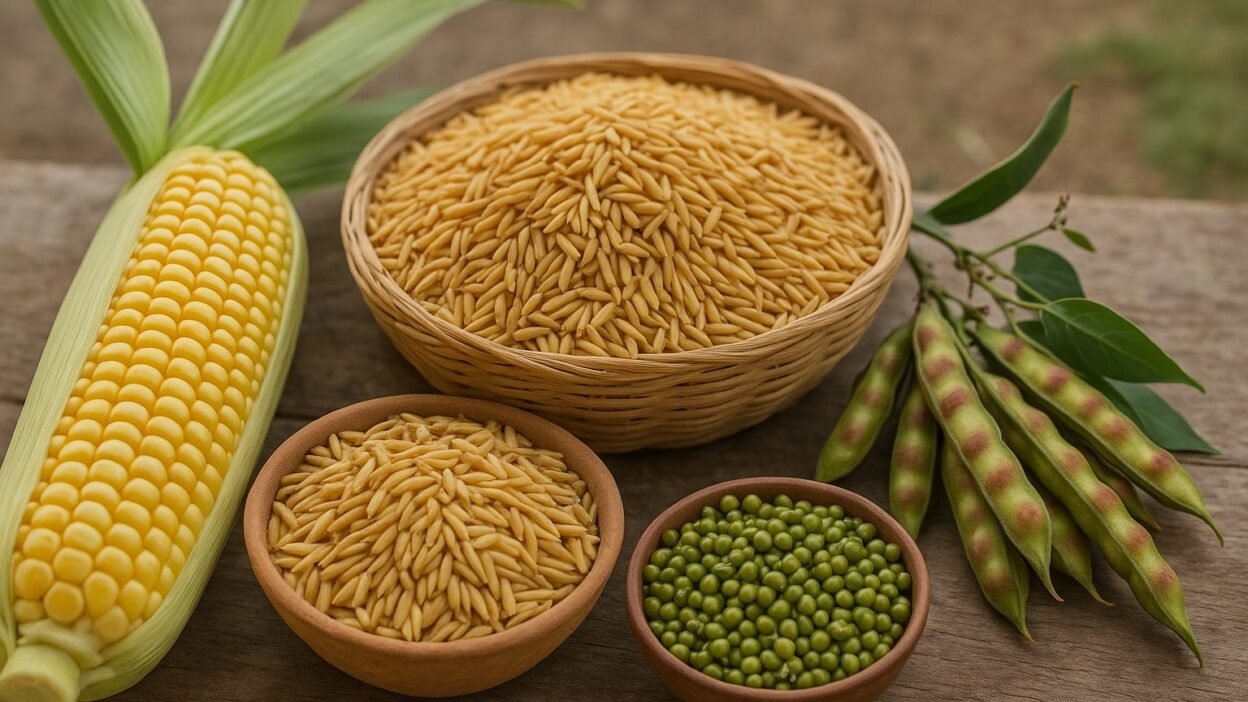
What to Grow in Summer: Top Kharif Crops in India
The Indian summer marks the beginning of the Kharif cropping season. With the arrival of the monsoon between June and July, it’s an ideal time for farmers to start sowing a wide range of crops that thrive in warm, wet conditions. Knowing what to plant now can prepare your fields for a successful harvest and optimize your profits. Let’s explore the best Kharif crops to grow in India this summer.
What Are Kharif Crops?
Kharif crops, also known as monsoon crops, are sown at the beginning of the rainy season (June–July) and harvested in the autumn (September–October). These crops need plenty of water and warmth to germinate and grow, making them perfect for India’s diverse climatic regions during summer.
Top Kharif Crops to Grow in Summer
1. Paddy (Rice)
Rice is India’s most important Kharif crop, especially in states like West Bengal, Punjab, and Tamil Nadu.
- Requires standing water and high humidity
- Ideal sowing time: June–July
- Popular varieties: IR64, Swarna, Basmati
2. Maize (Corn)
A profitable option for both human consumption and animal feed, maize thrives in well-drained soil.
- Requires moderate rainfall and sunlight
- Suitable for intercropping with pulses or vegetables
- Varieties: HQPM-1, Bio-9637
3. Cotton
Cotton is a major cash crop, commonly grown in Maharashtra, Gujarat, and Telangana.
- Requires black soil and warm temperatures
- Needs moderate irrigation and care against pests
- Varieties: Bt Cotton, Rajat, Suvin
4. Soybean
Soybean is gaining popularity due to its short duration and high earning potential.
- Thrives in medium black soil
- Improves soil fertility through nitrogen fixation
- Popular varieties: JS-335, NRC-37
5. Pulses (Tur/Arhar, Moong, Urad)
Kharif pulses are great for crop rotation and improving soil health.
- Require less water, suitable for rainfed areas
- High-protein and in strong market demand
- Best for mixed and intercropping
6. Groundnut (Peanut)
Often grown in sandy loam soil, groundnut is a valuable Kharif oilseed crop.
- Needs 70–90 cm rainfall
- Well-drained soil is essential
- Top varieties: JL-24, TG-26
7. Millets (Bajra, Jowar)
Millets are climate-resilient and ideal for arid and semi-arid zones.
- Low water requirement
- Rich in nutrition, increasingly in demand
- Suitable for dryland farming
Tips for a Successful Kharif Crop Season
- Select crops suited to your region’s rainfall and soil type
- Use certified seeds for better germination and disease resistance
- Opt for crop rotation to maintain soil fertility
- Monitor pest and disease outbreaks regularly
- Ensure proper drainage to prevent waterlogging
Conclusion
Choosing the right Kharif crops and preparing your field before the monsoon can significantly impact your farm’s productivity and income. Whether you grow rice in the East or cotton in the West, make informed decisions based on local conditions and market demand.
Ready to Sow? Take Action Now!
As the monsoon approaches, start preparing your fields and selecting your seeds today. Visit your local Krishi Vigyan Kendra (KVK) or agriculture officer for region-specific guidance and subsidized seed programs. A well-prepared farm leads to a successful harvest!