Vermicomposting: Complete Guide to Easy Farm Setup
What is Vermicomposting?
Vermicomposting is the process of using earthworms to convert organic waste into nutrient-rich compost. This natural fertilizer enhances soil quality, increases crop yield, and reduces dependency on chemical inputs—making it a sustainable choice for Indian farmers.
Benefits of Vermicomposting for Farmers
- Improves soil fertility and structure
- Reduces waste by recycling farm and household leftovers
- Cost-effective and eco-friendly fertilizer option
- Enhances plant growth and improves yield quality
- Generates extra income by selling excess vermicompost
Step-by-Step Vermicomposting Setup
1. Choose a Suitable Location
- Shaded or semi-shaded area to avoid direct sunlight
- Proper drainage to avoid water logging
- Easy access to water and organic waste
2. Select the Right Container or Bed
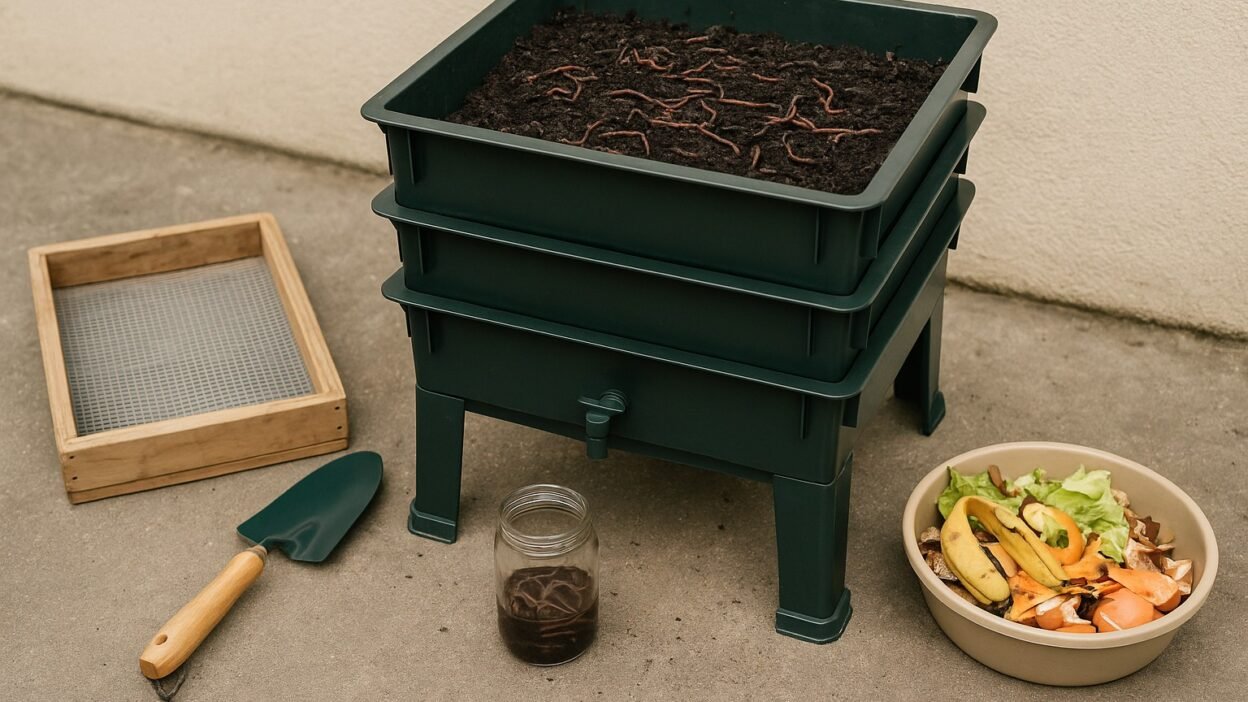
- Mud tanks, brick beds, or plastic containers can work well
- Ideal size: 10 ft x 3 ft x 1 ft for small to medium farms
- Ensure ventilation and small holes for drainage
3. Layering the Bed
- Bottom layer: Dry leaves or husk for aeration
- Middle layer: Cow dung and organic kitchen/farm waste
- Top layer: Introduce earthworms (approx. 1 kg per 100 kg waste)
4. Choosing the Right Earthworms
- Eisenia fetida (Red wigglers) are most commonly used
- Locally available composting worms are also effective
5. Maintenance and Feeding
- Keep the bed moist (like a squeezed sponge)—water lightly if dry
- Turn the compost lightly every 10-15 days
- Add fresh waste once the previous batch is half-decomposed
- Avoid meat, dairy, citrus, and oily foods—they harm earthworms
6. Harvesting the Compost
- In 45–60 days, compost turns dark and crumbly
- Stop feeding for 5–7 days before harvesting
- Separate worms and collect the compost
7. Storing and Using Vermicompost
- Store in jute or cloth bags in a cool, dry place
- Apply 2–3 tons per acre, mixed with topsoil
- Use as base manure or during crop planting
Common Problems and How to Solve Them
- Foul smell: Too wet or excess food—reduce feeding, improve drainage
- Ants or pests: Keep the area clean and surround with water
- Worms escaping: Overheated or too dry—restore moisture and shade
Boost Your Farm Naturally with Vermicompost!
By converting your organic waste into valuable compost, you not only enrich your soil but also save costs and protect the environment. Start small and grow your vermicomposting system as your farm thrives.
Ready to start vermicomposting on your farm? Connect with your local Krishi Vigyan Kendra (KVK) or agricultural extension officer for hands-on training and support. Turn waste into wealth today!