
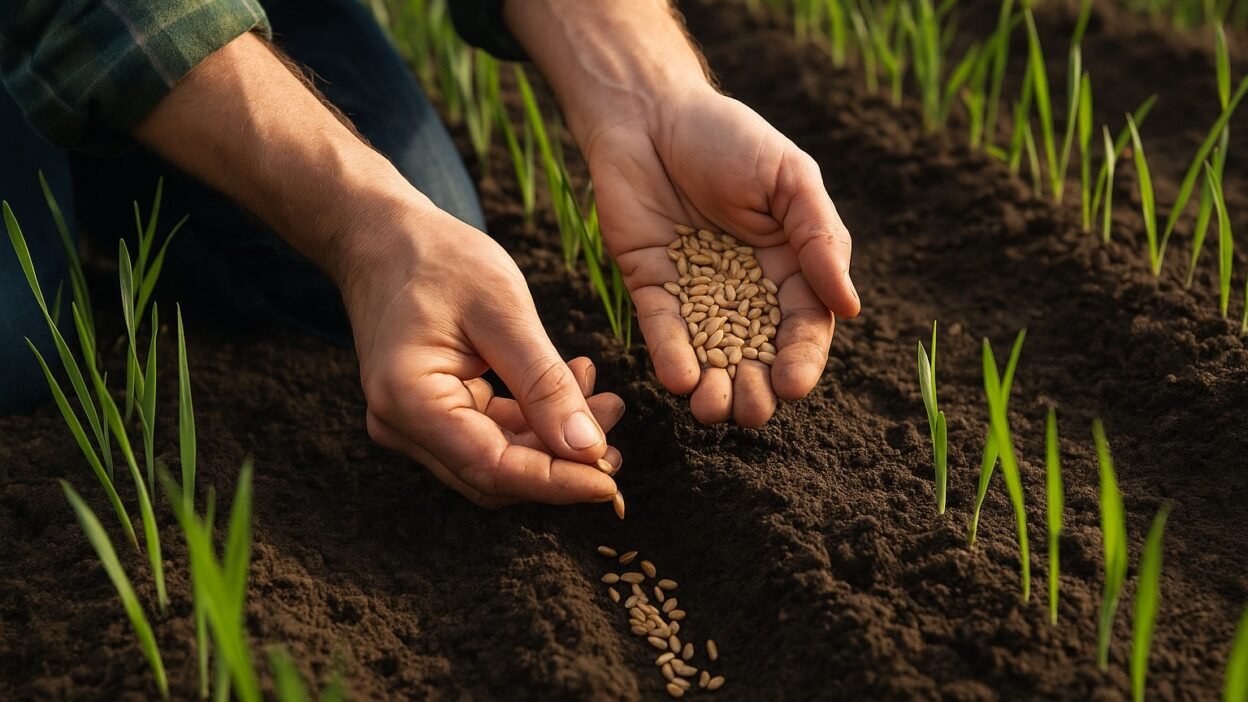
How to Grow Wheat Organically: A Farmer’s Guide
Why Grow Wheat Organically?
Organic wheat farming is gaining popularity in India due to increasing consumer demand and better soil health. By avoiding chemical fertilizers and pesticides, you can grow cleaner, healthier crops while improving your land’s long-term fertility.
Step-by-Step Organic Wheat Farming Process
1. Choose the Right Wheat Variety
Select wheat varieties that are well-suited to your local climate and resistant to common pests and diseases. In India, popular organic wheat varieties include:
- HD 2967 – Suitable for north-western plains
- PBW 343 – Known for better yield and disease resistance
- Lok 1 – Good choice for central India
2. Soil Preparation
A fertile, well-drained loamy soil with neutral pH is ideal. Here’s how to prepare your land organically:
- Add well-rotted farmyard manure (FYM) at 8-10 tons per acre
- Use compost and green manure such as dhaincha or sunhemp
- Plough the field 2–3 times and harrow to a fine tilth
3. Seed Treatment
Before sowing, treat wheat seeds with natural bio-agents to protect against soil-borne diseases:
- Use Trichoderma viride at 10g/kg of seed
- Jeevamrut or Beejamrut can also be used for natural coating
4. Sowing Time and Method
For most Indian states, sow between early November and mid-December. Use line sowing methods for better aeration and weed control. Recommended spacing:
- Row-to-row: 20–25 cm
- Seed rate: 35–40 kg/acre
5. Organic Nutrient Management
Instead of chemical fertilizers, use these organic inputs:
- FYM or compost: 5–10 tons/acre
- Vermicompost: 1 ton/acre
- Panchagavya or Jeevamrut applications every 15–20 days
6. Weed Control
Control weeds organically using:
- Timely hand weeding (at 20 and 40 days after sowing)
- Mulching with crop residue
- Crop rotation with legumes
7. Pest and Disease Management
Follow Integrated Pest Management (IPM) practices:
- Neem oil spray (5ml/litre) for aphid control
- Use light traps to catch flying insects
- Spray Trichoderma or Pseudomonas fluorescens for fungal protection
8. Irrigation
Wheat requires 4–6 irrigations. Critical stages are:
- Crown root initiation (20–25 DAS)
- Tillering (40–45 DAS)
- Flowering and grain filling stages
Use drip or furrow irrigation for water efficiency.
9. Harvesting and Storage
Harvest when the grains are hard and golden. Dry thoroughly before storage. Use neem leaves or ash in storage bins to prevent insects organically.
Benefits of Organic Wheat Farming
- Premium market price due to high demand
- Low input costs over time
- Improved soil health and sustainability
- Safe food for consumers and farming families
Conclusion and Next Steps
Organic wheat farming is not only better for your land but also brings better returns and healthier food. Start small, experiment with a plot, and scale up as you gain confidence.
Call to Action
Ready to shift towards organic wheat farming? Connect with your local Krishi Vigyan Kendra (KVK), join organic farmer groups in your district, and attend training sessions to learn tried-and-tested natural practices. The future of farming is organic—be part of the change today!