Best Practices for Organic Turmeric Farming
Introduction
Organic turmeric farming is gaining popularity due to growing global demand for chemical-free spices. With the right techniques, Indian farmers can cultivate high-quality turmeric, improve soil health, and earn better returns. Here’s a practical guide to help you adopt successful organic turmeric farming methods.
1. Selection of Suitable Land and Climate
- Turmeric thrives in warm and humid climates with well-distributed rainfall (1500-2000 mm annually).
- Choose loamy or alluvial soil with good drainage and rich in organic matter.
- Avoid waterlogged or saline soils.
2. Choosing the Right Variety
- Select high-yielding and disease-resistant varieties like ‘Suvarna’, ‘Prabha’, ‘Roma’, or ‘Rajendra Sonia’.
- Choose based on local climate, market demand, and rhizome quality.
3. Organic Soil Preparation
- Plough the field 2-3 times to break clods and remove weeds.
- Apply 25-30 tonnes of well-decomposed farmyard manure (FYM) per acre during land preparation.
- Use bio-fertilizers such as Azospirillum and Phosphobacteria to enhance nutrient uptake.
4. Seed Material and Planting
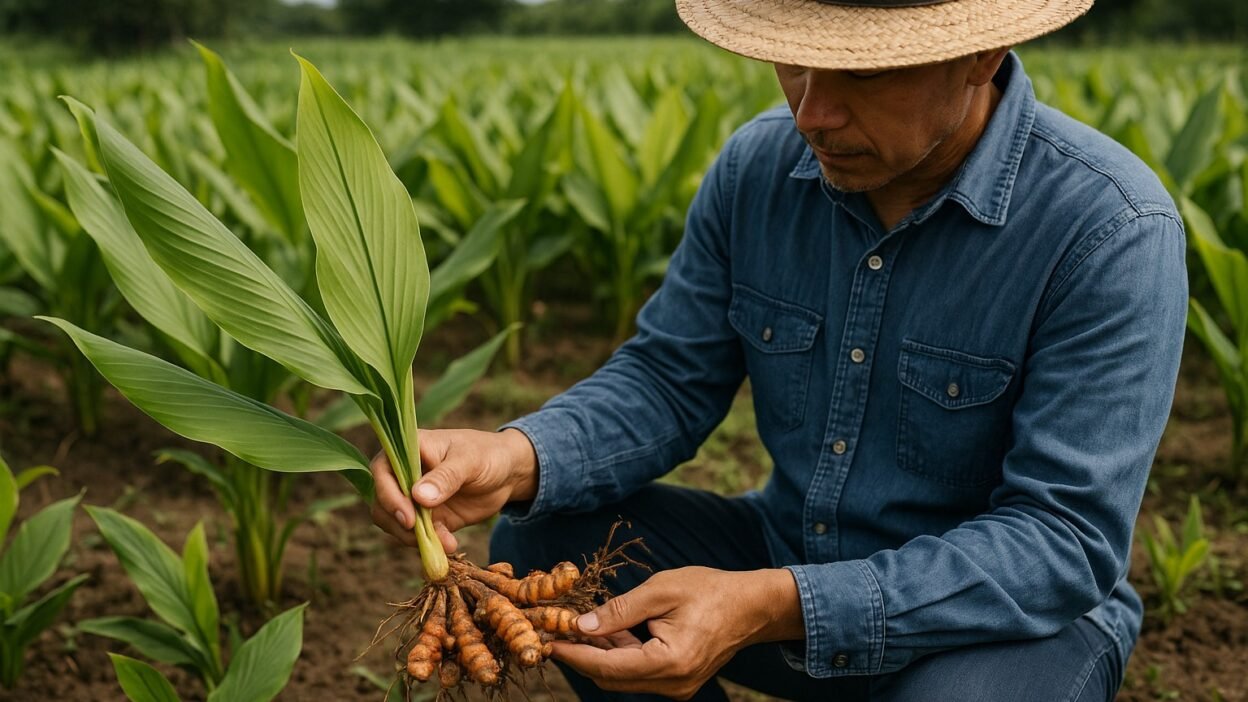
- Use disease-free, mother rhizomes weighing 25–30g.
- Pre-treat with Trichoderma viride or neem extracts to prevent fungal infections.
- Plant in prepared ridges and furrows during May-June before monsoon starts.
5. Nutrient Management
Organic fertilizers improve rhizome development and soil fertility:
- Top-dress with vermicompost (1–2 tonnes/acre) after 60 and 120 days.
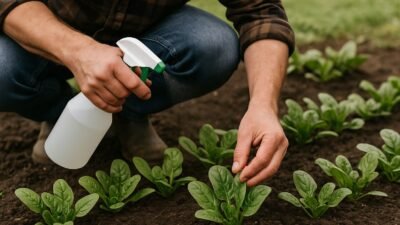
- Spray neem or panchgavya solution every 15–20 days for crop vigor and pest control.
- Use green manures like sun hemp before sowing, and intercrop with legumes to fix nitrogen.
6. Weed Management
Since chemical weedicides are not permitted in organic farming, manual methods are recommended:
- Weed regularly—at least 3-4 times during the growing season.
- Mulch the field with sugarcane trash or dry leaves to suppress weed growth and retain moisture.
7. Pest and Disease Control
- Inspect crops regularly for rhizome rot, leaf blotch, or thrips.
- Use bio-controls like Metarhizium or Beauveria bassiana for insect pests.
- Apply neem oil sprays (3%-5%) every 10–15 days during infestation.
8. Harvesting and Post-Harvest Handling
- Turmeric matures in 7–9 months. Harvest when leaves turn yellow and dry.
- Lift rhizomes carefully, clean, and boil for 30-45 minutes.
- Dry under the sun for 10–15 days, then polish before storage or sale.
Certification for Organic Produce
To sell turmeric as certified organic, farmers must register with authorized agencies like NPOP (National Programme for Organic Production) and maintain a minimum of three years without synthetic inputs. Proper documentation and farm inspections are crucial parts of getting certified.
Conclusion and Next Steps
By following these organic farming practices, Indian farmers can produce high-quality, eco-friendly turmeric that fetches premium market prices. Organic methods not only protect health and the environment but also ensure long-term soil fertility and sustainability.
Ready to start organic turmeric farming? Contact your nearest Krishi Vigyan Kendra (KVK) or local agriculture officer for training, certification help, and financial support schemes.